
Texas Charter Schools and Credit by Exam — A Parent's Guide for Open-Enrollment Charter Families (2026)


Texas is home to one of the largest open-enrollment public charter school systems in the country. Each charter campus is a tuition-free public school, follows the Texas Essential Knowledge and Skills (TEKS) standards, and is authorized directly by the Texas Education Agency rather than by a local school board. Major Texas charter networks include (alphabetically): BASIS Texas, Great Hearts Texas, Harmony Public Schools, IDEA Public Schools, International Leadership of Texas (ILTexas), KIPP Texas, Uplift Education, and YES Prep, among others.
For families at any of these networks — or at a smaller standalone charter — Credit by Exam (CBE) works under the same Texas Education Code provisions as for ISD students, but the practical mechanics are a little different. Here's what charter families should know.
How CBE works for a Texas charter student
Texas Education Code lets a school grant high-school credit when a student passes a standardized exam for a course they have not formally taken. The specific passing-score threshold is set in state law and by the testing provider, and the exact figure varies by exam and scenario (for example, acceleration vs. credit recovery). Two CBE routes most charter families consider:
- UT High School (UTHS) CBE — administered year-round by The University of Texas at Austin. Year-round registration, available statewide.
- Campus or partner-district testing windows — the individual charter campus, or a partnering ISD, may run its own credit-by-exam periods. Subjects, dates, and fees vary.
What's different at a charter school
- Credit is awarded by the charter campus. When the score report comes back from UTHS (or the testing provider), the charter campus records the credit on the student's transcript. There is no separate "charter network central office" approval the way an ISD might handle district-wide policy.
- Resident district coordination matters when transferring. Texas charter schools are public schools, but if a student later moves from a charter to a traditional ISD (or vice versa), the receiving school evaluates the incoming transcript against its own graduation plan. CBE credit recorded at the charter doesn't automatically transfer without that evaluation.
- Counselor capacity varies by campus. Some charter campuses have larger counseling teams with full advanced-academics support; some are smaller and assign one counselor across multiple grade levels. Start the CBE conversation earlier rather than later.
Common CBE scenarios for charter-school families
- Algebra 1 acceleration before 9th grade. Strong middle-school students at any charter campus that offers Algebra 1 (or whose feeders do) test out to enter their charter high school at Geometry. This is a common acceleration use case and opens the path to AP Calculus by senior year.
- Heritage-language credit for multilingual students. Students who already speak another language fluently at home sometimes use CBE for Spanish I/II — or another available foreign language — to formalize that fluency as foreign-language credit.
- Summer credit recovery or summer acceleration. Earning a single semester of a core class via CBE during the summer keeps a student aligned with the standard graduation plan.
- Schedule clearing for AP and dual-credit. Many Texas charter networks partner with local community colleges (Houston Community College, Dallas College, Austin Community College, Alamo Colleges, and others depending on region) for dual-enrollment. CBE on a social-studies or foreign-language credit can free schedule space for those courses.
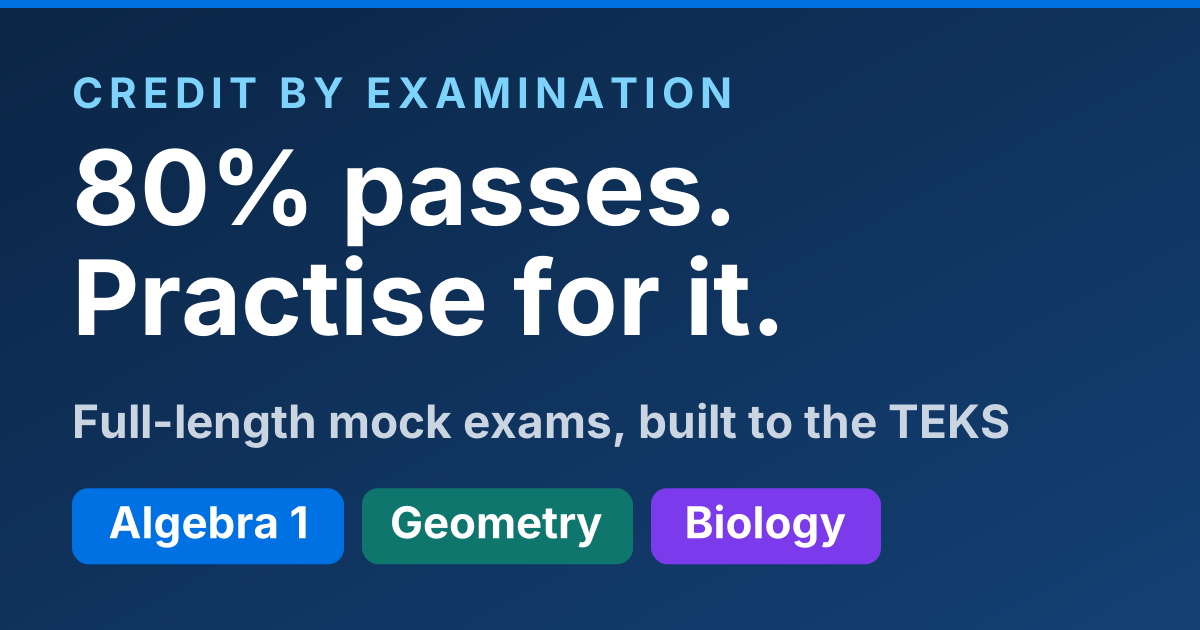
Credit by Examination asks for 80% with no prior instruction. Full-length mock exams written to the same TEKS the exam is drawn from — Algebra 1, Geometry, Biology, Chemistry and more.
See the subjects →
Every subject has free practice questions with the full worked solution. Take some and see whether they look like the exam your district set.
See the subjects →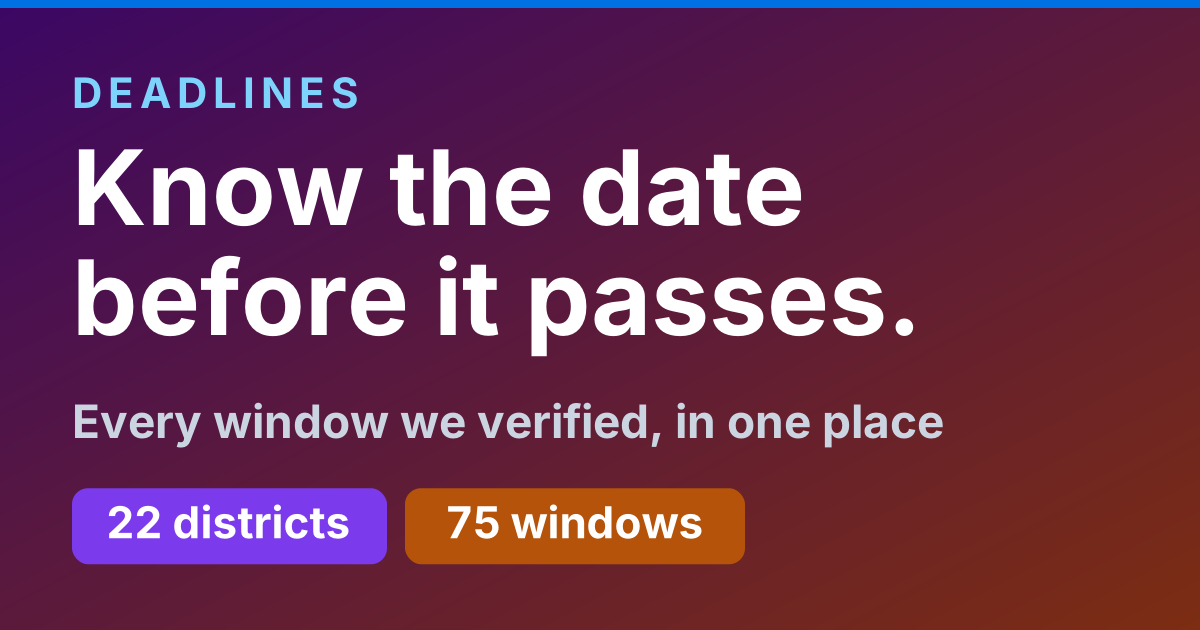
Every Credit by Examination window we have verified from a district's own calendar — 22 districts, 75 windows, each with the source it came from.
See the deadlines →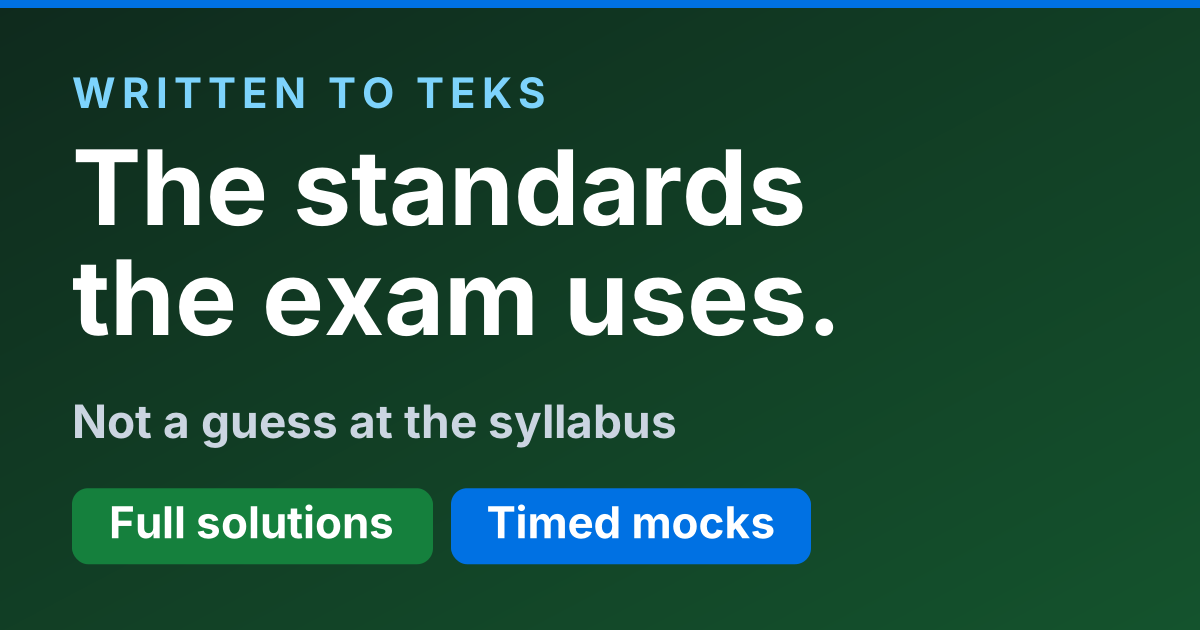
Not a guess at what might be on it. Full worked solutions and timed mock exams built to the same TEKS the Credit by Examination is written against.
Browse the subjects →Subjects most commonly pursued by charter families
- Algebra 1, Algebra 2, Geometry, Pre-Calculus — the dominant acceleration pipeline.
- Biology, Chemistry — required science credits.
- Spanish I/II — foreign-language requirement.
- US History, World Geography, World History — social-studies credit.
What Texas CBE™ offers charter-school families
Texas CBE™ is an independent practice platform — not affiliated with any Texas charter school, charter network, the Texas Education Agency, or UT High School:
- TEKS-aligned practice questions on every CBE subject charter families typically pursue, with full-length mock exams modeled after the official CBE format.
- 5-language platform (English, Korean, Spanish, Vietnamese, Chinese) — useful for families who prefer to review explanations in a language other than English.
- Free sample questions on every subject, no signup required.
- SAT Math practice (Digital SAT format) on the same platform.
Full-course access is $29.99 per subject for 3 months — typically less than a single CBE retake fee.
Three things to verify with your charter campus counselor
- The campus's accepted CBE providers and recording process. Most Texas charter campuses accept UTHS CBE scores, but the recording process and any additional verification steps differ by campus.
- Coordination if you may transfer later. If there is any possibility your student will transfer between the charter and a traditional ISD (or to a different charter), ask both schools how the CBE credit will be evaluated. A 10-minute phone call up front saves a lot of headache later.
- Timing for course-placement decisions. Most charter campuses lock fall course placement in late spring. If you're using CBE to influence next-year placement, confirm the cutoff date your campus uses for accepting score reports.
This post is general guidance based on publicly available information. Charter-school CBE policies, fees, accepted providers, and testing windows are set at the campus and/or network level and change over time. Texas CBE™ is an independent practice platform and is not affiliated with, endorsed by, or sponsored by any Texas charter school, charter network, the Texas Education Agency, UT High School, or any other school. Always verify the current requirements directly with your campus counselor before registering for any exam.


