Causes of the American Revolution: From Stamp Act to Lexington
The Revolution didn't start at Lexington — it built up through a decade of British acts and colonial protests. Master the chain of cause-and-effect from Stamp Act (1765) to the first shots (1775).


A decade of escalation
The American Revolution didn't erupt from nowhere — it was the boiling point of a 10-year cycle of British taxation and colonial protest. To master this section of the CBE, learn the events in order and remember which side caused which.
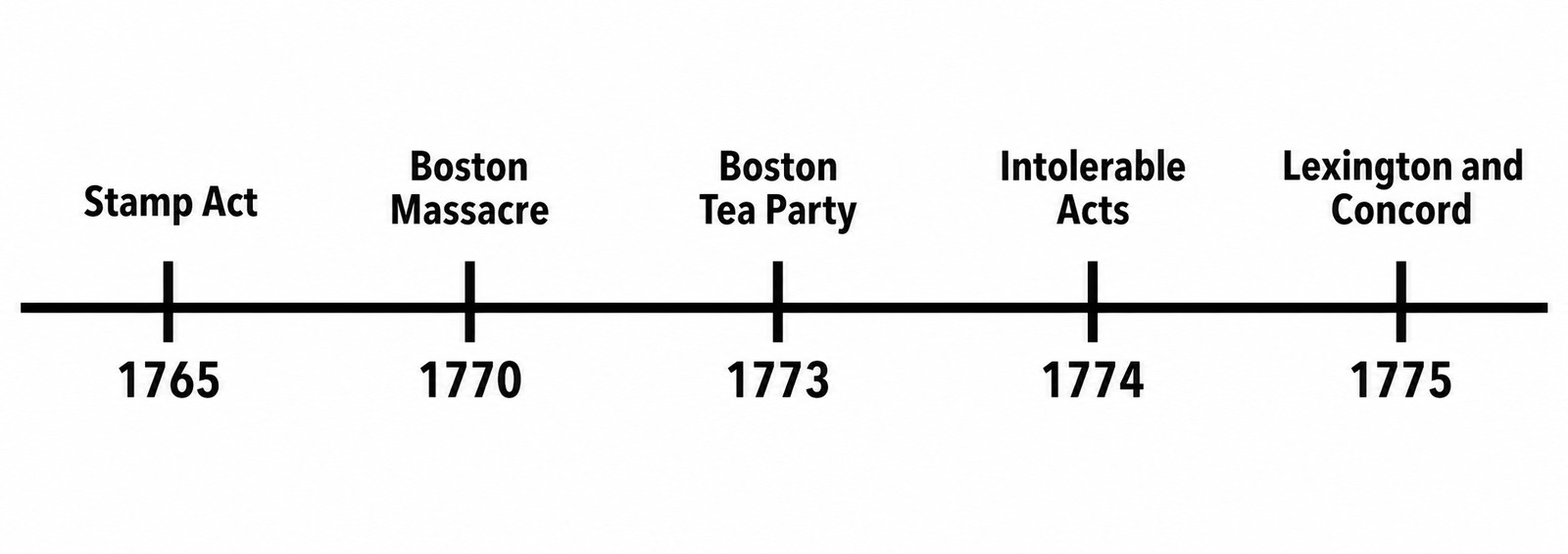
The five events you must know
- Stamp Act (1765) — first direct tax on colonists. Required stamps on legal documents, newspapers, even playing cards. Colonists protested with the slogan "No taxation without representation." Repealed in 1766.
- Boston Massacre (1770) — British soldiers fired into a crowd of colonial protesters in Boston, killing 5. Used as propaganda by Sons of Liberty.
- Boston Tea Party (1773) — colonists disguised as Native Americans dumped 342 chests of British tea into Boston Harbor in protest of the Tea Act.
- Intolerable Acts (1774) — Britain's punishment for the Tea Party: closed Boston Harbor, dissolved Massachusetts government. Colonists called these "Intolerable." First Continental Congress convened in response.
- Lexington and Concord (1775) — first shots of the war. British troops marched on colonial weapons stockpile; Paul Revere warned militias; "the shot heard round the world" rang out at Lexington.
Check yourself
Quick check #1
Which event was Britain's punishment of Massachusetts for the Boston Tea Party?
The Intolerable Acts (1774) closed Boston Harbor and stripped Massachusetts of self-government as direct retaliation for the Tea Party. Colonists called them "intolerable" — and the First Continental Congress responded.
Quick check #2
Where were the first shots of the American Revolution fired in 1775?
April 19, 1775 — British troops marching to seize colonial weapons at Concord met militia at Lexington. "The shot heard round the world" began the war.