细胞周期与有丝分裂:一个细胞如何变成两个
CBE 同时考细胞周期的宏观阶段(G1/S/G2/M)与有丝分裂的亚期(前期、中期、后期、末期)。掌握两个层面及其联系。


两个层次——别混淆
Texas Biology CBE 会问两种不同类型的细胞分裂题,它们处于不同尺度:
- 细胞周期(宏观视角):一个细胞的完整生命,分为 G1 → S → G2 → M。
- 有丝分裂(微观视角):仅指 M 期,分为前期 → 中期 → 后期 → 末期。
如果题目说"在细胞周期的哪个阶段……",答案是 G1 / S / G2 / M 之一。如果说"在有丝分裂的哪个阶段……",答案是前期 / 中期 / 后期 / 末期之一。混淆两者会白白丢分。
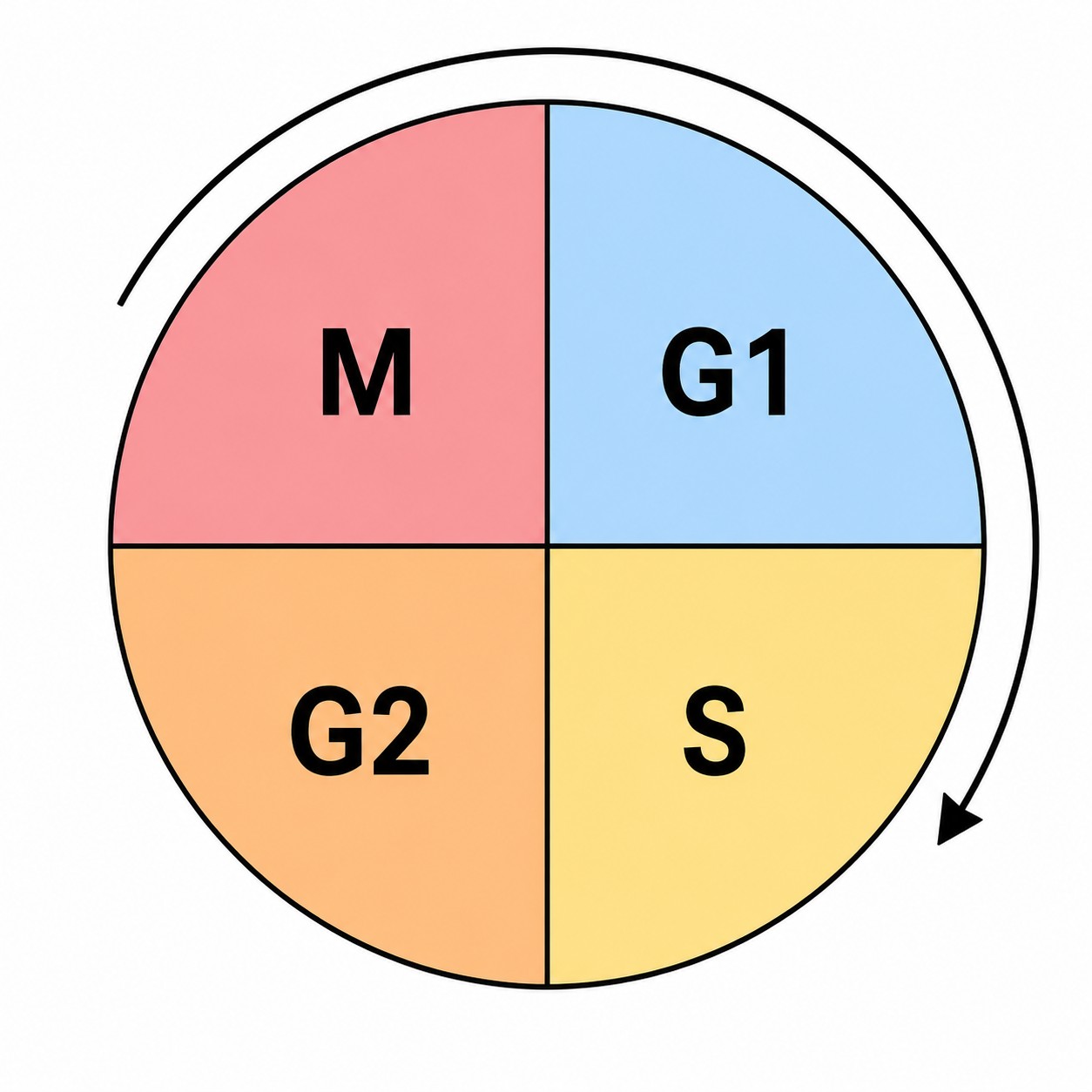
细胞周期时钟
每个阶段发生什么
- G1(生长 1)——细胞长大,合成蛋白质,细胞器加倍。最长阶段。
- S(合成)——DNA 复制。每条染色体加倍为两条姐妹染色单体。
- G2(生长 2)——细胞为分裂做准备:合成有丝分裂相关蛋白,检查 DNA。
- M(有丝分裂 + 胞质分裂)——细胞在物理上分裂成两个相同的子细胞。
经典 CBE 问题:"DNA 复制发生在哪个阶段?"——答案是 S 期,不是 M。M 期分配的是已经加倍的 DNA,而不是复制。
有丝分裂(M 期)的四个阶段
细胞进入 M 期后经历四个亚期。每个都有独特的外观:
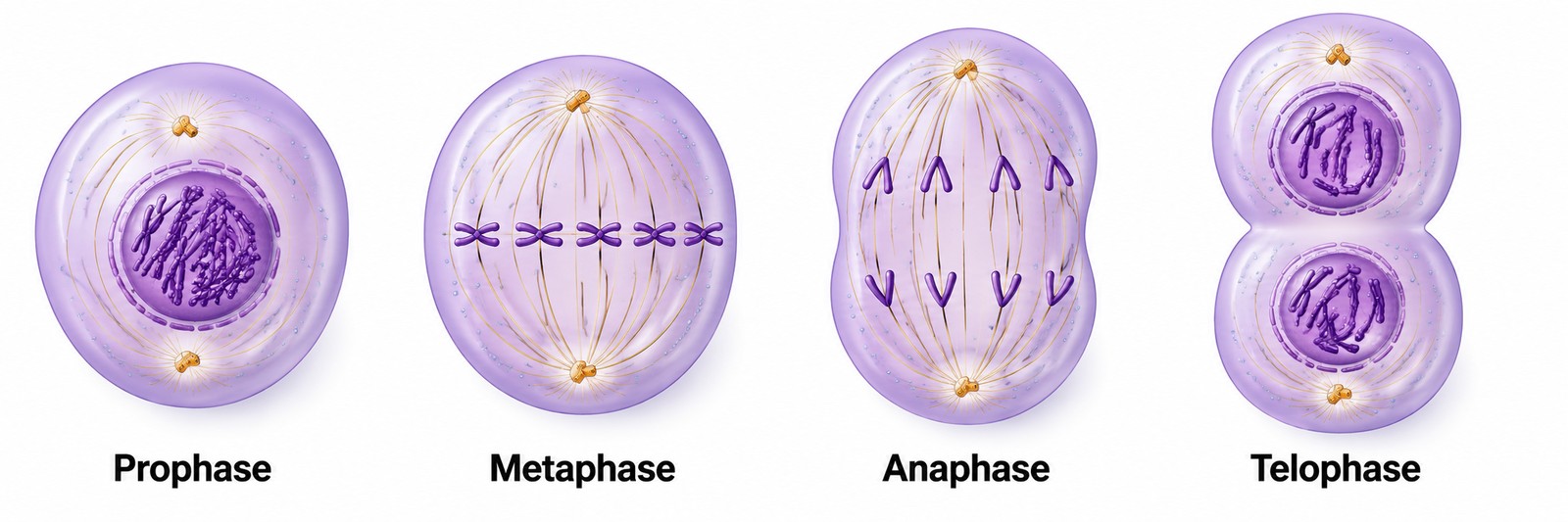
前期(Prophase,P):染色体凝缩并变得可见。核膜解体。纺锤体形成。
中期(Metaphase,M):染色体在中间(赤道板)排成一列。口诀:M = Middle(中间)。
后期(Anaphase,A):染色体分开;姐妹染色单体被拉向相对两极。A = Apart(分开)。
末期(Telophase,T):新的核膜围绕两组染色体重新形成。胞质分裂将细胞掐成两个。
记忆口诀
"Please Make A Tuesday"——Prophase、Metaphase、Anaphase、Telophase。顺序几乎是字母顺序;只要记住 M 在 P 之后,而不是之前。 有丝分裂产生什么?
有丝分裂将一个细胞产生两个相同的二倍体子细胞。遗传物质被均分——两个子细胞染色体数量与母细胞相同,DNA 也相同。有丝分裂用于生长、修复和无性繁殖。
不要与减数分裂(第 4 课)混淆——减数分裂产生四个单倍体配子用于有性繁殖。
自我检测
快速检测 #1
DNA 在细胞周期的哪个阶段复制?
S = 合成(Synthesis)。DNA 复制在这里发生,所以进入 M 期时每条染色体已有两条姐妹染色单体。
快速检测 #2
当染色体在细胞赤道排成一列时,展示的是有丝分裂的哪个阶段?
Metaphase = Middle。染色体先在赤道板对齐,随后在后期被分开拉走。