有丝分裂 vs 减数分裂:两种分裂,两种结果
有丝分裂与减数分裂听起来相似,但服务于完全不同的目的。掌握四个关键差异(细胞数、倍性、目的、遗传同一性),你就不会再错任何一道比较题。


为什么这是最容易错的比较之一
有丝分裂和减数分裂都分裂细胞。它们使用相似的示意图、相似的阶段名称和相似的术语。正因如此学生容易混淆——也正因如此 CBE 每次考试都会出至少一道直接比较题。
好消息:只有四个关键差异。记住下表,你将永不失分。
最关键的四个差异
有丝分裂 vs. 减数分裂
| 特征 | 有丝分裂 | 减数分裂 |
|---|---|---|
| 子细胞数 | 2 | 4 |
| 倍性 | 二倍体(2n) | 单倍体(n) |
| 遗传同一性 | 与母细胞相同 | 遗传上各异 |
| 目的 | 生长、修复、无性繁殖 | 有性繁殖(产生配子) |
并排视觉对比
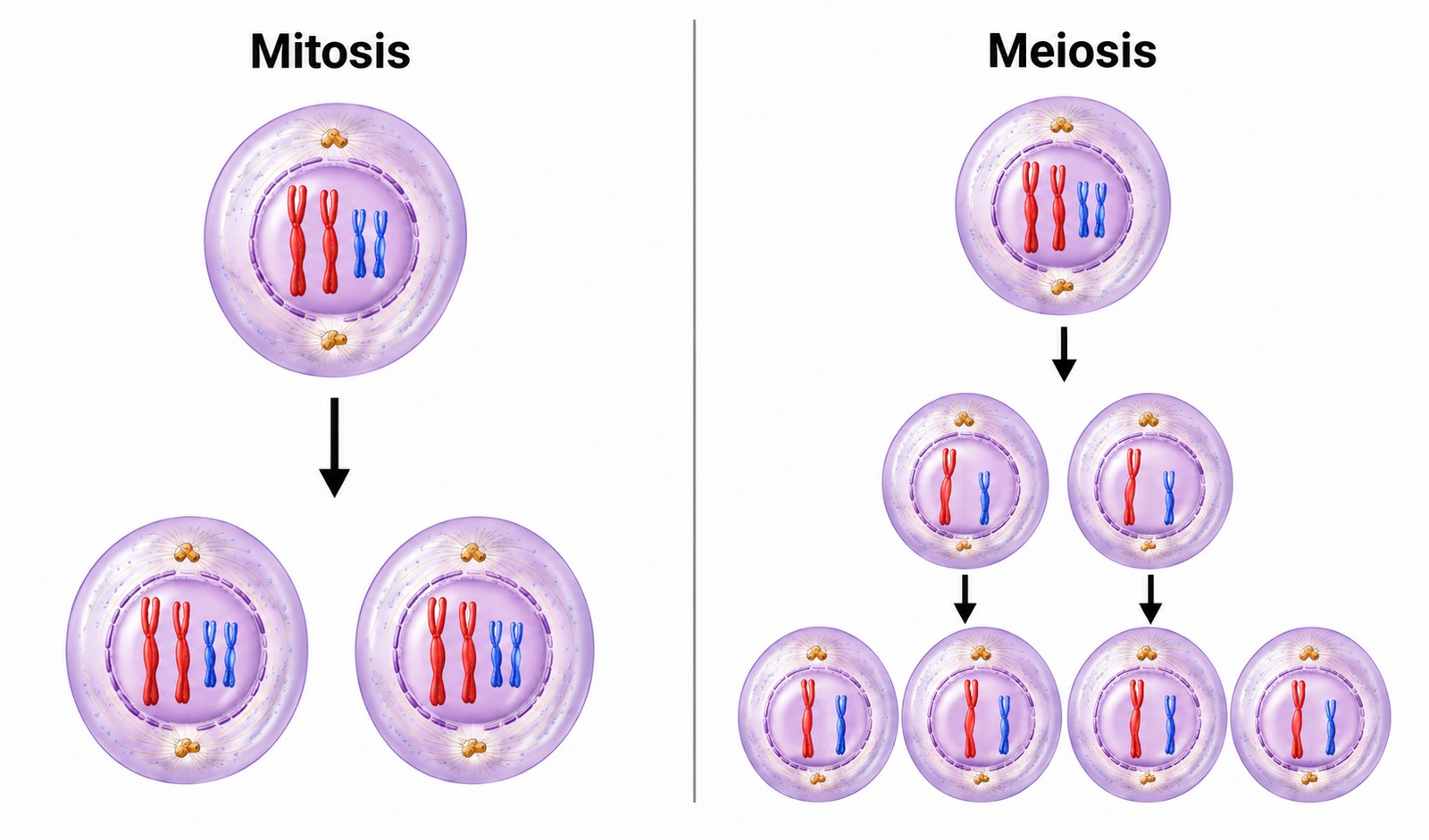
"二倍体"和"单倍体"究竟是什么意思
人有 46 条染色体——那是二倍体数目(2n = 46)。减数分裂将其减半为 23——那是单倍体数目(n = 23)。当精子(n=23)与卵子(n=23)受精时,所得合子恢复为 2n=46。
- 二倍体(2n)——完整的染色体组,以同源对存在。
- 单倍体(n)——半组,每对取一条。仅精子和卵子是单倍体。
各自何时发生?
- 有丝分裂:除精子/卵子外,身体的每个细胞。皮肤、骨骼、肌肉、肠道——都通过有丝分裂分裂以生长和修复。
- 减数分裂:仅发生在生殖细胞(睾丸和卵巢)中以产生精子和卵子。
交叉互换:减数分裂独有
减数分裂的一个独有特征:在减数分裂前期 I,同源染色体交换片段——这就是交叉互换(crossing over)。这也是减数分裂的子细胞彼此以及与母细胞在遗传上不同的原因。有丝分裂没有交叉互换,因此其子细胞都是克隆体。
考试提示
如果题目提到"遗传变异"、"交叉互换"、"单倍体"或"配子"——答案涉及减数分裂,而不是有丝分裂。如果提到"相同"、"生长"或"修复"——那就是有丝分裂。 自我检测
快速检测 #1
减数分裂从一个母细胞产生多少个子细胞?
减数分裂包含连续两次分裂,产生 4 个遗传上不同的单倍体细胞(配子)。有丝分裂只产生 2 个。
快速检测 #2
哪种特征存在于减数分裂而不存在于有丝分裂中?
交叉互换仅发生在减数分裂 I——这也是减数分裂的子细胞与母细胞及彼此之间在遗传上不同的原因。