Nền Móng Thuộc Địa: Ba Vùng và Vì Sao Địa Lý Quan Trọng
13 thuộc địa Mỹ được chia thành ba vùng riêng biệt — New England, Middle, Southern — mỗi vùng có khí hậu, địa lý và kinh tế khác nhau. Các em cần nắm vững các vùng này và những đặc điểm địa lý đã định hình cách định cư.


Địa lý trước, lịch sử sau
Trước khi các em có thể hiểu Cách mạng Mỹ (American Revolution) hay Nội chiến (Civil War), các em phải hiểu người Mỹ đã định cư ở đâu và vì sao. Địa lý quyết định người dân thuộc địa có thể trồng gì, kiếm tiền ra sao, và thậm chí xây dựng loại xã hội nào. Kỳ thi CBE Lịch sử Hoa Kỳ của Texas luôn có ít nhất một câu hỏi mỗi kỳ về ba vùng thuộc địa — và gần như luôn là điểm miễn phí nếu các em nắm được kiến thức cơ bản.
Ba vùng thuộc địa
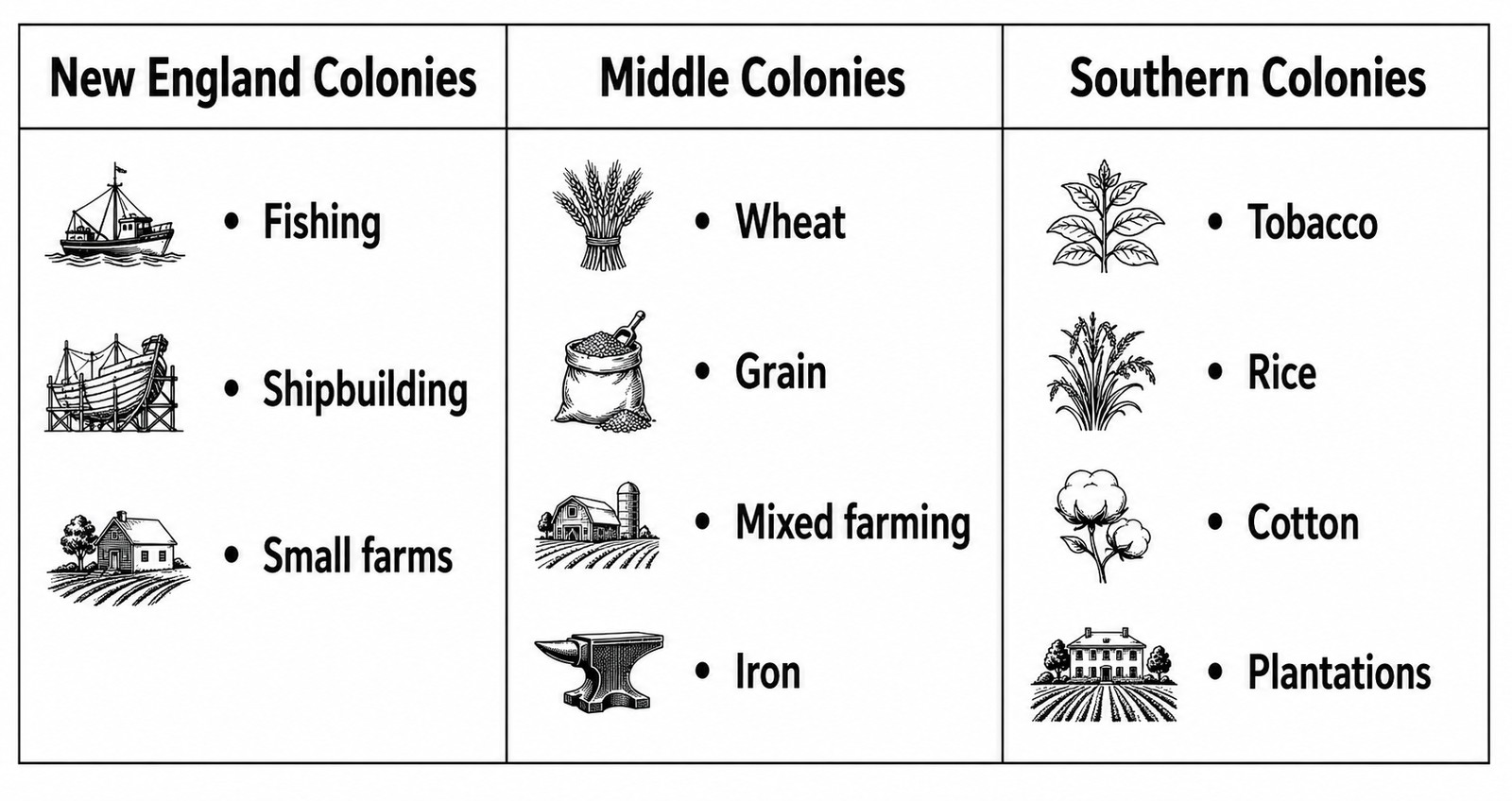
- New England (Massachusetts, Connecticut, Rhode Island, New Hampshire) — đất đá, mùa đông lạnh → đánh cá, đóng tàu, nông trại nhỏ. Các thị trấn được xây quanh nhà thờ Thanh giáo (Puritan).
- Các Thuộc Địa Miền Trung (Middle Colonies) (New York, Pennsylvania, New Jersey, Delaware) — đất đai màu mỡ, khí hậu ôn hòa → lúa mì, ngũ cốc, nông nghiệp hỗn hợp, sắt. Được mệnh danh là "Vựa bánh mì" (Breadbasket). Đa dạng tôn giáo.
- Các Thuộc Địa Miền Nam (Southern Colonies) (Virginia, Maryland, the Carolinas, Georgia) — khí hậu ấm, mùa vụ dài → thuốc lá, gạo, chàm, sau này là bông. Các đồn điền lớn do lao động nô lệ vận hành.
Bức tường núi: dãy Appalachian như một rào chắn
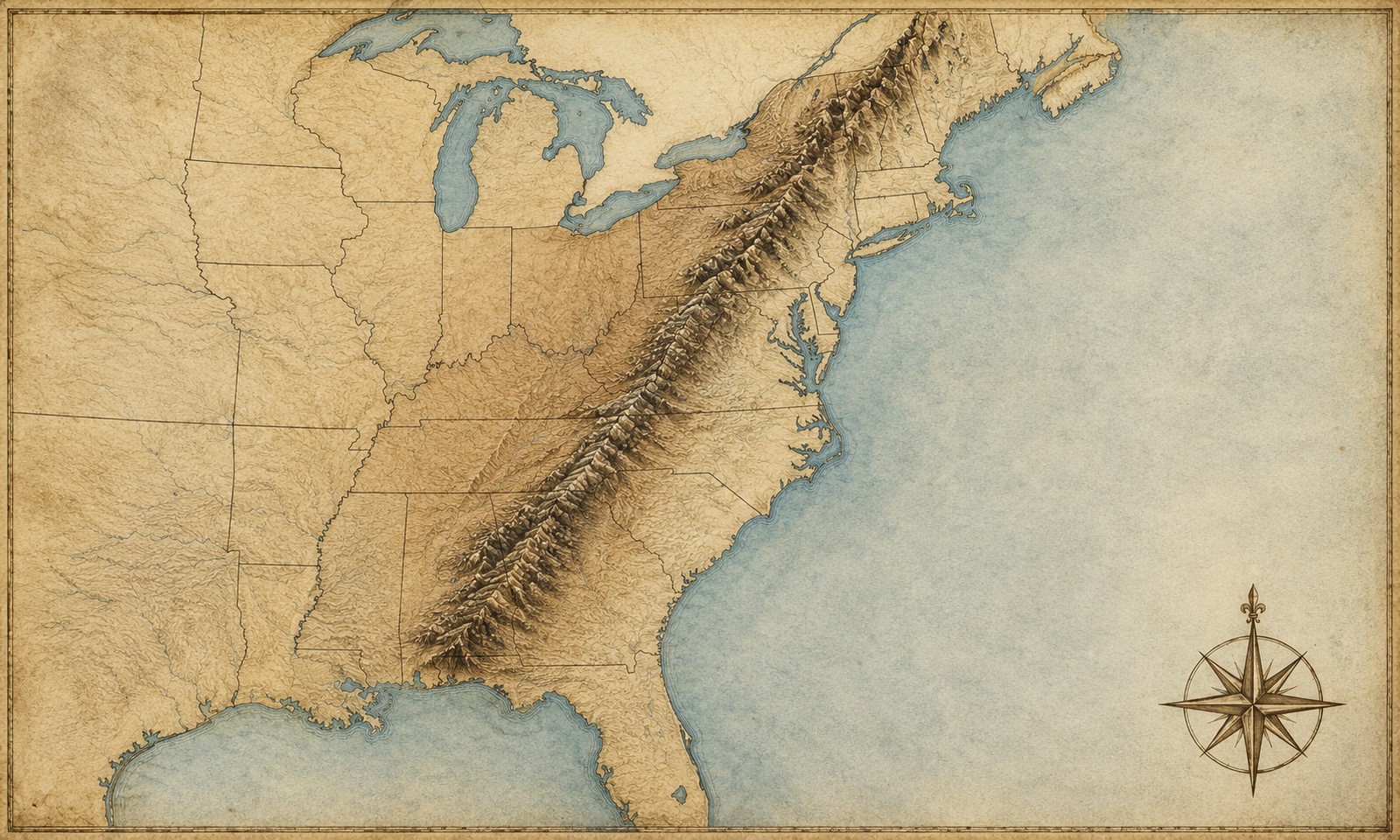
Nhìn bất kỳ bản đồ thời thuộc địa nào, các em sẽ thấy các khu định cư bị dồn vào một dải hẹp dọc theo bờ biển Đại Tây Dương. Đó là vì Dãy núi Appalachian chạy như một bức tường từ bắc xuống nam, chặn đứng sự mở rộng về phía tây cho đến khi đường bộ và đường sắt cuối cùng xuyên qua chúng. Các đặc điểm địa lý khác đã định hình nước Mỹ thời kỳ đầu:
- Đồng bằng Duyên hải Đại Tây Dương (Atlantic Coastal Plain) — bằng phẳng, màu mỡ, dễ định cư → hầu hết các thuộc địa đầu tiên tập trung ở dải này.
- Hệ thống sông Mississippi — sau này trở thành đại lộ của quá trình mở rộng về phía tây (sau khi vụ Mua Louisiana năm 1803 mở đường).
- Ngũ Đại Hồ (Great Lakes) — rào chắn tự nhiên với Canada và cũng là huyết mạch vận chuyển tương lai.