유사분열 vs 감수분열: 두 가지 분열, 두 가지 결과
유사분열과 감수분열은 이름은 비슷하지만 완전히 다른 목적을 가집니다. 네 가지 핵심 차이(딸세포 수, 배수성, 목적, 유전적 동일성)를 확실히 익히면 비교 문제는 놓치지 않게 됩니다.


이 비교가 가장 많이 틀리는 이유
유사분열과 감수분열은 둘 다 세포를 나눕니다. 사용되는 다이어그램도 비슷하고, 단계 이름도 비슷하며, 용어도 비슷합니다. 그래서 학생들이 헷갈리고, CBE는 매 시험마다 최소 한 문항의 직접 비교 문제를 냅니다.
좋은 소식: 핵심 차이는 단 네 가지뿐입니다. 아래 표를 외워 두면 다시는 틀리지 않을 것입니다.
중요한 네 가지 차이
유사분열 vs. 감수분열
| 특징 | 유사분열 | 감수분열 |
|---|---|---|
| 딸세포 수 | 2 | 4 |
| 배수성 | 2배체 (2n) | 반수체 (n) |
| 유전적 동일성 | 부모와 동일 | 유전적으로 고유 |
| 목적 | 성장, 회복, 무성생식 | 유성생식 (생식세포 생산) |
나란히 시각 비교
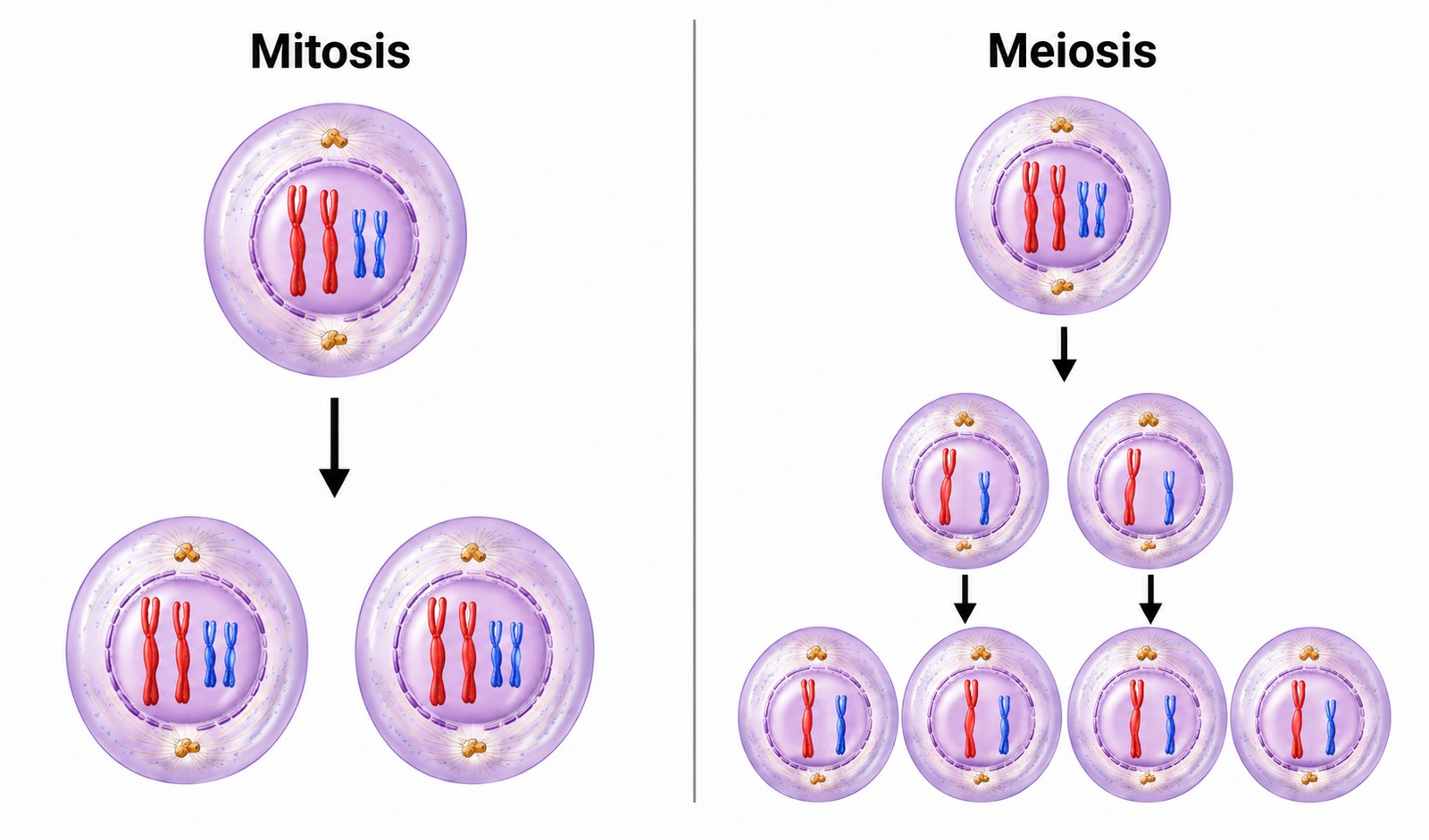
‘2배체’와 ‘반수체’의 진짜 의미
사람의 염색체는 46개입니다 — 이것이 2배체 수(2n = 46)입니다. 감수분열은 이를 절반으로 줄여 23개로 만듭니다 — 이것이 반수체 수(n = 23)입니다. 정자(n=23)가 난자(n=23)를 수정하면 접합자는 다시 2n=46이 됩니다.
- 2배체(2n) — 상동 염색체 쌍이 갖춰진 완전한 염색체 세트.
- 반수체(n) — 절반 세트, 각 쌍 중 하나씩. 정자와 난자만이 반수체입니다.
각각은 언제 일어나는가?
- 유사분열: 정자/난자 세포를 제외한 몸의 모든 세포. 피부, 뼈, 근육, 창자 — 모두 성장과 회복을 위해 유사분열로 분열합니다.
- 감수분열: 오직 생식세포(정소와 난소)에서 정자와 난자를 만들 때만 일어납니다.
교차: 감수분열에서만
감수분열의 고유한 특징: 감수분열 전기 I에서 상동 염색체가 일부분을 교환하는데, 이것이 교차(crossing over)입니다. 그 때문에 감수분열의 딸세포는 서로(그리고 부모와도) 유전적으로 다릅니다. 유사분열에는 교차가 없으므로 딸세포들은 클론입니다.
시험 팁
문항에 “유전적 변이”, “교차”, “반수체”, “생식세포” 같은 단어가 나오면 답은 감수분열과 관련됩니다. “동일한”, “성장”, “회복”이 나오면 유사분열입니다. 스스로 점검하기
빠른 점검 #1
감수분열은 하나의 부모 세포로부터 몇 개의 딸세포를 만드나요?
감수분열은 연속된 두 번의 분열을 포함하여 유전적으로 고유한 반수체 세포 4개(생식세포)를 만듭니다. 유사분열은 2개만 만듭니다.
빠른 점검 #2
감수분열에서는 나타나지만 유사분열에서는 나타나지 않는 특징은?
교차는 감수분열 I에서만 일어납니다 — 그래서 감수분열의 딸세포는 부모 및 서로와 유전적으로 다릅니다.