진화와 자연 선택: 개체군은 어떻게 시간에 따라 변하는가
자연 선택은 '가장 강한 자의 생존'이 아니라, 유전 가능한 변이에 근거한 차별적 번식입니다. 다윈의 메커니즘, 진화의 증거, 그리고 유명한 갈라파고스 핀치새를 확실히 익혀 두시기 바랍니다.


한 문장으로 요약한 다윈의 개념
자연 선택은 생존과 번식에 영향을 미치는 형질의 유전 가능한 변이에 따라 개체마다 번식 성공률이 달라지는 현상입니다.
정의가 조금 길지만, 하나씩 뜯어보면 필요한 모든 개념이 들어 있습니다:
자연 선택의 네 가지 조건
- 변이 — 한 개체군 내의 개체들이 서로 다릅니다.
- 유전성 — 그 차이가 부모에서 자손으로 전달됩니다.
- 차별적 생존/번식 — 어떤 변이는 다른 변이보다 더 많이 번식합니다.
- 시간 — 유리한 형질이 세대를 거치며 더 흔해집니다.
자연 선택이 아닌 것
- 가장 강한 자의 생존이 아닙니다. 공작의 꼬리는 무겁고 비효율적이지만, 암컷이 좋아하기 때문에 살아남는 것입니다.
- 어떤 목표에 이끌려 일어나지 않습니다. 돌연변이는 무작위이고, 선택은 이를 걸러낼 뿐입니다.
- 개체가 하는 일이 아닙니다. 진화하는 것은 개체군이며, 개체는 그저 살거나 죽을 뿐입니다.
고전적인 예: 나방(peppered moth)
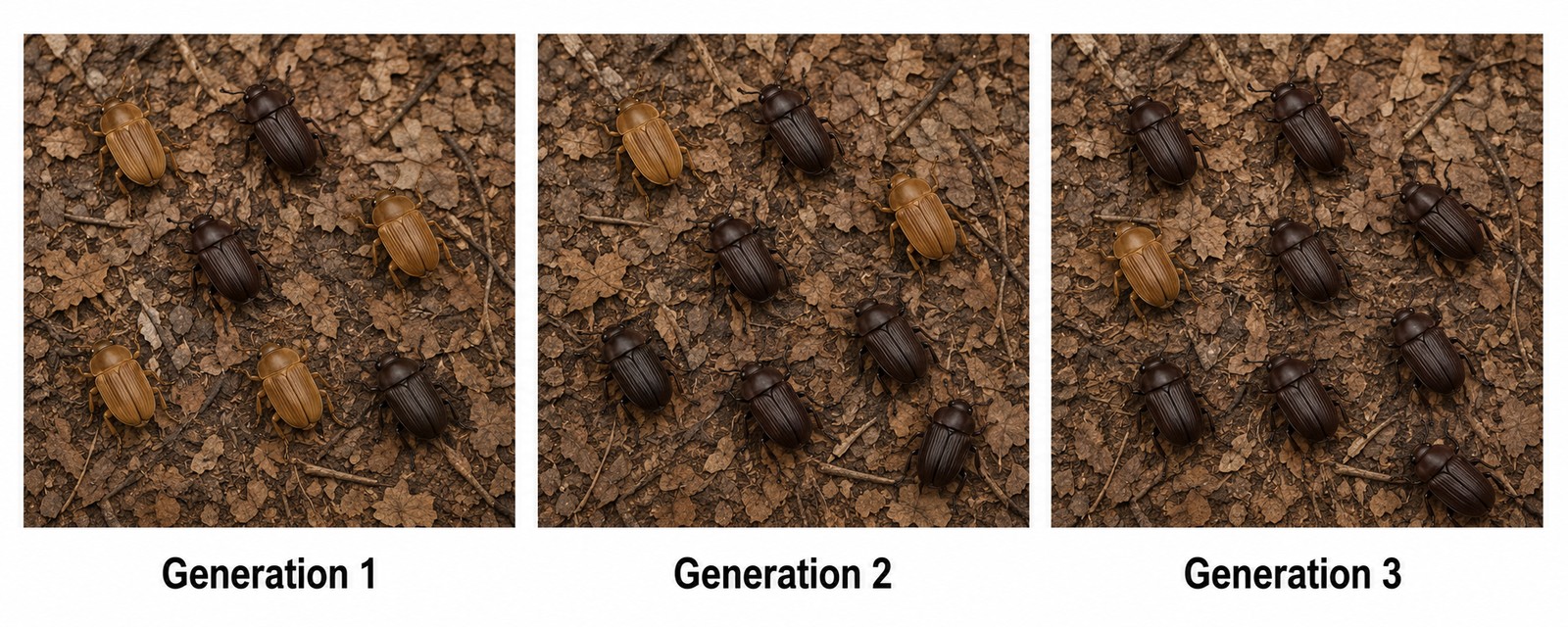
세 세대에 걸쳐 어두운 변이가 우세해집니다. 왜일까요? 포식자(새)가 밝은 개체를 더 자주 발견해 잡아먹었기 때문입니다. 어두운 딱정벌레들은 진화하려고 "노력"한 것이 아니라, 단지 살아남아 번식할 만큼 도움이 되는 유전 가능한 색깔 형질을 우연히 가지고 있었을 뿐입니다.
다윈의 갈라파고스 핀치새
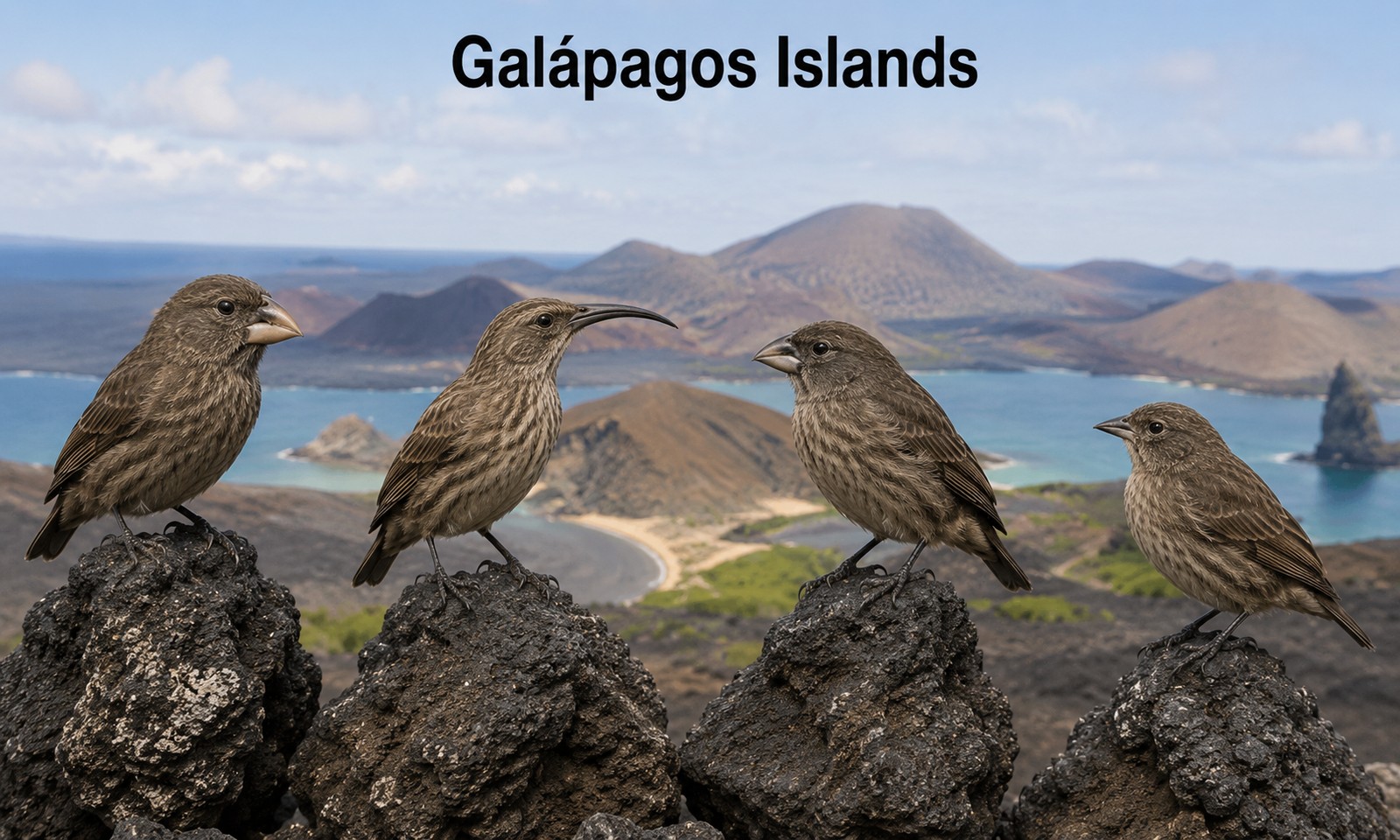
찰스 다윈은 갈라파고스 제도에서 14종의 핀치새를 관찰했는데, 이들은 모두 하나의 대륙 공통 조상에서 유래했습니다. 각 종의 부리는 서로 다른 먹이원에 맞춰 진화했습니다 — 곤충용의 작고 뾰족한 부리, 씨앗을 쪼개는 두껍고 튼튼한 부리, 꽃 속을 뒤지는 길고 굽은 부리 등입니다.
적응 방산
하나의 조상이 서로 다른 생태 지위 또는 환경에 적응한 여러 종으로 분화하는 과정을 뜻합니다. 갈라파고스 핀치새가 대표 예입니다. 진화의 여섯 가지 증거
- 화석 기록 — 지층은 시간에 따른 변화를 보여줍니다(고래의 조상은 다리가 있었습니다).
- 상동 구조 — 사람의 팔, 박쥐의 날개, 고래의 지느러미가 동일한 뼈 배열을 갖습니다. 공통 조상이 있음을 시사합니다.
- 흔적 구조 — 맹장, 고래의 골반뼈처럼 조상 때 기능하던 흔적입니다.
- 발생학 — 척추동물 배아는 발생 초기에 서로 매우 닮았습니다.
- 생물지리학 — 고립된 섬의 종들은 가까운 대륙의 종과 유사합니다.
- 분자생물학 — 가까운 종일수록 DNA 유사성이 큽니다. 현대 진화 이론의 가장 강력한 증거입니다.
자주 등장하는 어휘
- 적응 — 특정 환경에서 생존/번식률을 높이는 유전 형질.
- 종분화 — 하나의 종이 생식적으로 격리된 두 종으로 갈라지는 과정.
- 유전적 부동 — 특히 소규모 개체군에서 대립유전자 빈도가 무작위로 변하는 현상.
- 유전자 흐름 — 이주를 통해 개체군 사이에 대립유전자가 이동하는 것.
스스로 점검하기
빠른 점검 #1
자연 선택이 일어나기 위해 반드시 필요한 조건이 아닌 것은 무엇입니까?
자연 선택은 오히려 특정 변이가 다른 변이보다 잘 살아남도록 만드는 도전적인 환경을 필요로 합니다. 아무런 변화가 없는 동일 환경에서는 선택 압력이 작동하지 않습니다.
빠른 점검 #2
다윈은 갈라파고스에서 서로 다른 먹이에 적합한 부리를 가진 14종의 핀치새를 관찰했습니다. 이는 어떤 진화 과정입니까?
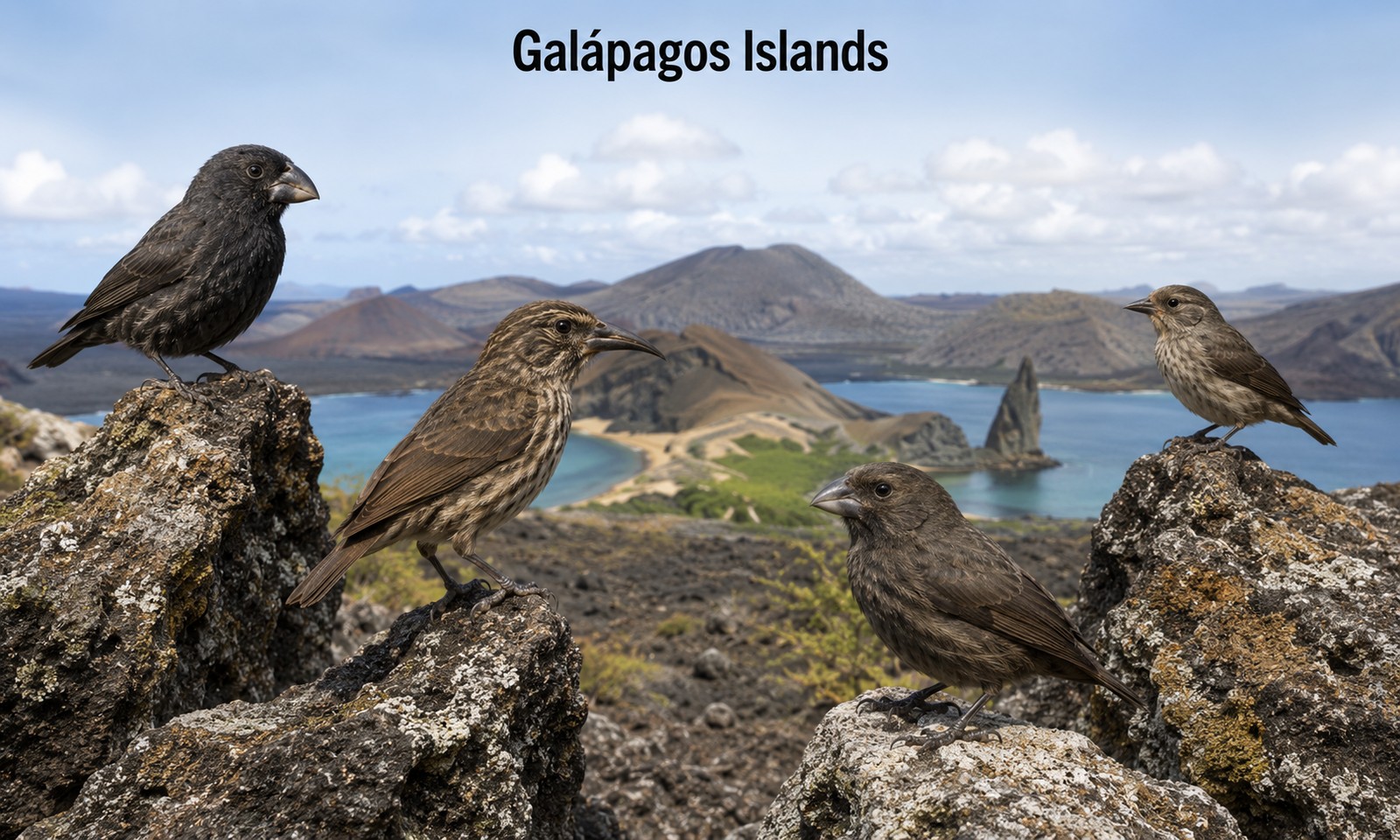
적응 방산: 하나의 조상이 서로 다른 생태 지위에 맞춰 여러 종으로 분화합니다. 수렴 진화는 정반대로 서로 다른 조상이 유사한 형질을 갖게 되는 것입니다.