세포막과 물질 수송: 무엇이 어떻게 드나드는가
세포막은 무엇이 들어오고 나갈지를 결정하는 경계입니다. 인지질 이중층, 수송 단백질, 삼투, 확산, 능동수송을 이 한 강의로 확실히 익혀 보세요.


세포막은 벽이 아니라 똑똑한 울타리
세포막은 세포 안팎을 오가는 물질을 결정합니다. 겉보기에는 단순하지만 한 번에 다섯 가지 일을 합니다 — 장벽, 검문소, 신호 수용체, 정체 표지, 수송 허브. 이 모든 것을 가능하게 하는 두 가지 구조적 특징이 있으며, 둘 다 CBE에서 직접 시험됩니다.
인지질 이중층
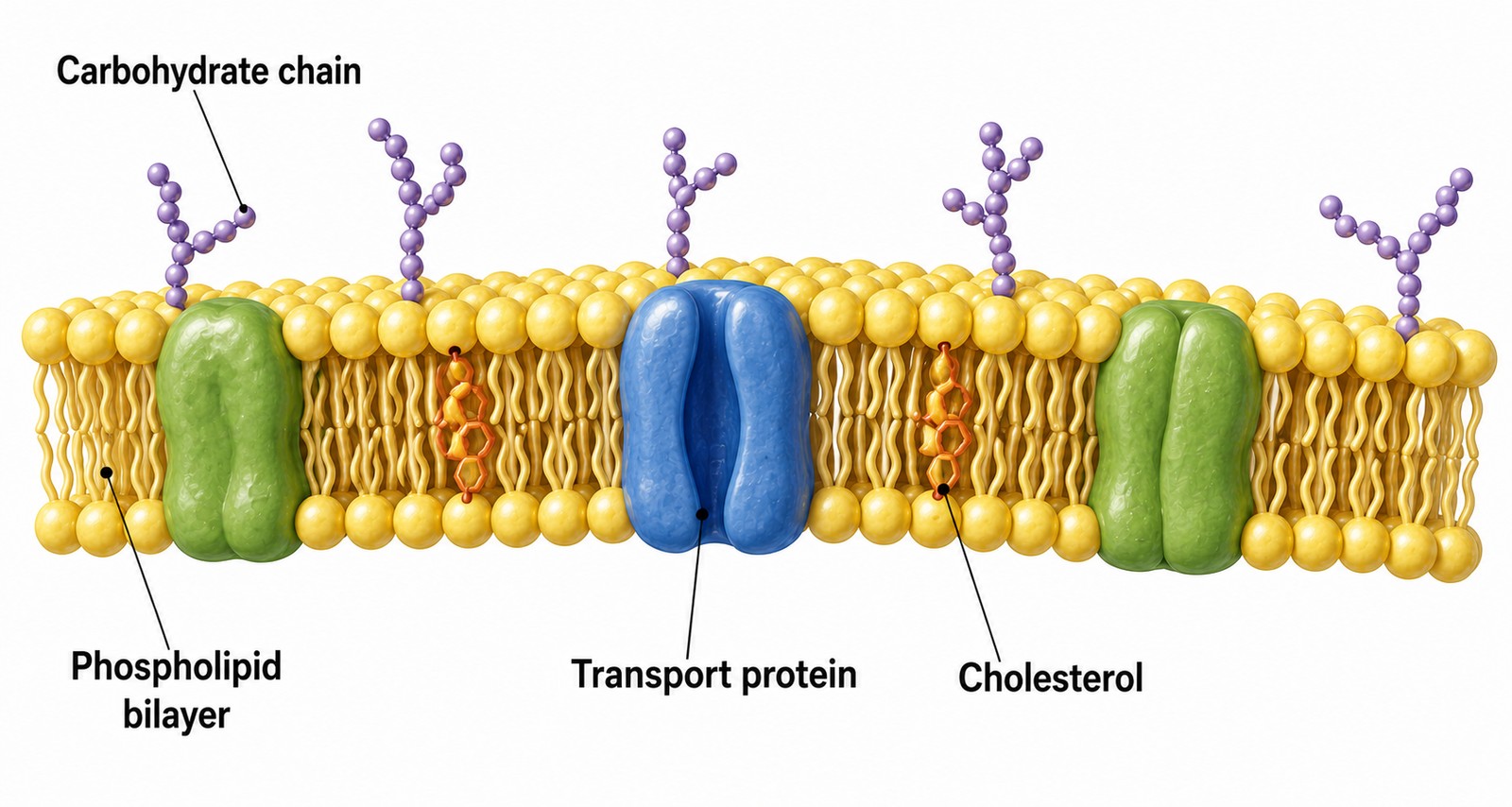
모든 세포막은 두 층의 인지질로 이루어져 있습니다. 각 인지질은 다음과 같은 부분을 갖습니다.
- 친수성 머리 (물을 좋아함) — 물이 있는 바깥 환경 쪽을 향합니다.
- 두 개의 소수성 꼬리 (물을 피함) — 서로를 향해 안쪽으로 향합니다.
결과는 샌드위치 모양: 머리는 바깥, 꼬리는 안쪽. 이 이중층만으로도 크거나 전하를 띤 물질은 모두 차단됩니다. 전하가 없는 작은 분자(산소, 이산화탄소, 물)는 통과할 수 있지만 이온과 큰 분자는 지나갈 수 없습니다.
수송 단백질이 빈틈을 메운다
이중층만으로는 이온, 당, 아미노산을 이동시킬 수 없습니다. 그때 수송 단백질이 등장합니다. 이중층을 관통하여 통로 또는 펌프 역할을 합니다.
- 통로 단백질 — 특정 분자가 흘러 지나갈 수 있게 열린 통로(수동수송).
- 운반 단백질 — 한쪽에서 분자를 결합하여 다른 쪽에서 놓아 줍니다.
- 펌프 — ATP를 사용해 농도 기울기에 거슬러 분자를 이동시킵니다.
이 조합 — 인지질 이중층 + 수송 단백질 — 이 바로 세포막을 선택적으로 투과성이게 합니다. 이 표현은 CBE에 그대로 등장합니다.
확산 vs. 삼투 vs. 능동수송
확산: 어떤 분자든 고농도에서 저농도로 이동. ATP 없음. 예: O₂, CO₂.
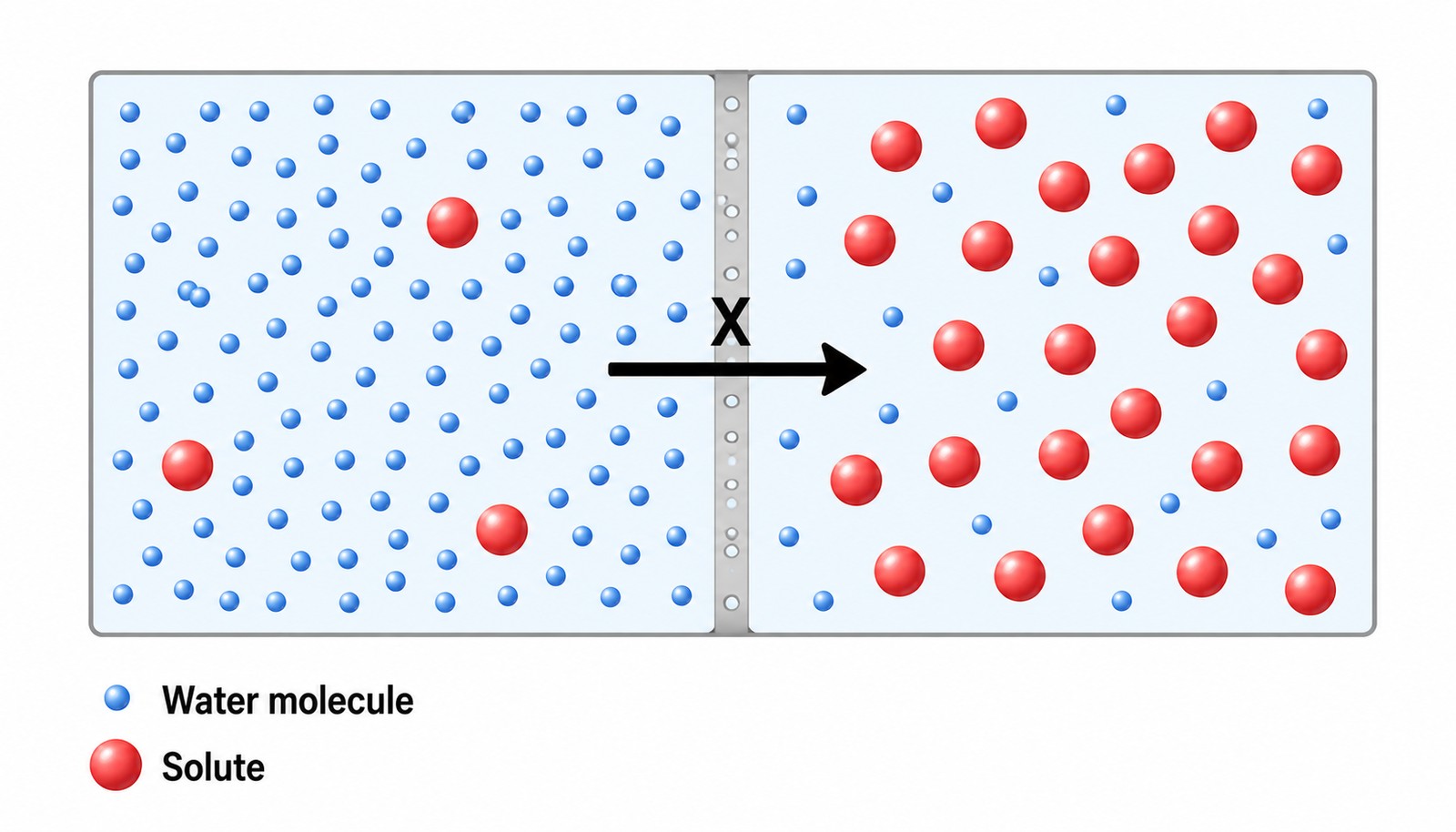
삼투: 물이 반투과성 막을 가로질러 용질이 적은 쪽에서 용질이 많은 쪽으로 이동. ATP 없음.
촉진 확산: 통로 또는 운반 단백질을 통한 수동수송. ATP 없음.
능동수송: 분자를 기울기 반대 방향(저 → 고)으로 펌핑. ATP 필요.
반드시 외워야 할 세 가지 용액 용어
- 저장액(Hypotonic) — 세포 바깥의 용질이 적음. 물이 안으로 몰려 들어감. 세포가 부풀고 터질 수 있음.
- 고장액(Hypertonic) — 세포 바깥의 용질이 많음. 물이 밖으로 빠져나감. 세포가 쪼그라듦.
- 등장액(Isotonic) — 용질 농도가 같음. 물의 순이동이 없음. 세포 크기 유지.
암기 팁
Hypo = 물이 세포 안으로 들어감(“하마가 물속으로 뛰어드는” 이미지). Hyper = 물이 밖으로 나감. Iso = 변화 없음. 스스로 점검하기
빠른 점검 #1
세포막의 선택적 투과성을 담당하는 조합은 무엇인가요?
이중층만으로는 이온과 큰 분자를 차단합니다. 수송 단백질은 선택적 통로를 만듭니다. 이 둘이 함께 세포막이 무엇을 통과시킬지 “선택”하게 하며, 이것이 선택적 투과성입니다.
빠른 점검 #2
동물세포가 고장액에 놓였습니다. 세포는 어떻게 될까요?
고장액 = 바깥에 용질이 더 많음. 물은 삼투에 의해 용질이 적은 쪽(안)에서 많은 쪽(밖)으로 이동하므로 세포는 물을 잃고 쪼그라듭니다. 동물세포에는 이를 막아 줄 세포벽이 없습니다.