大萧条与 New Deal:从崩盘到复苏
1929年的股市崩盘引发了美国历史上最严重的经济危机。Franklin D. Roosevelt 总统的 New Deal 重新定义了联邦政府的角色。


国家崩塌
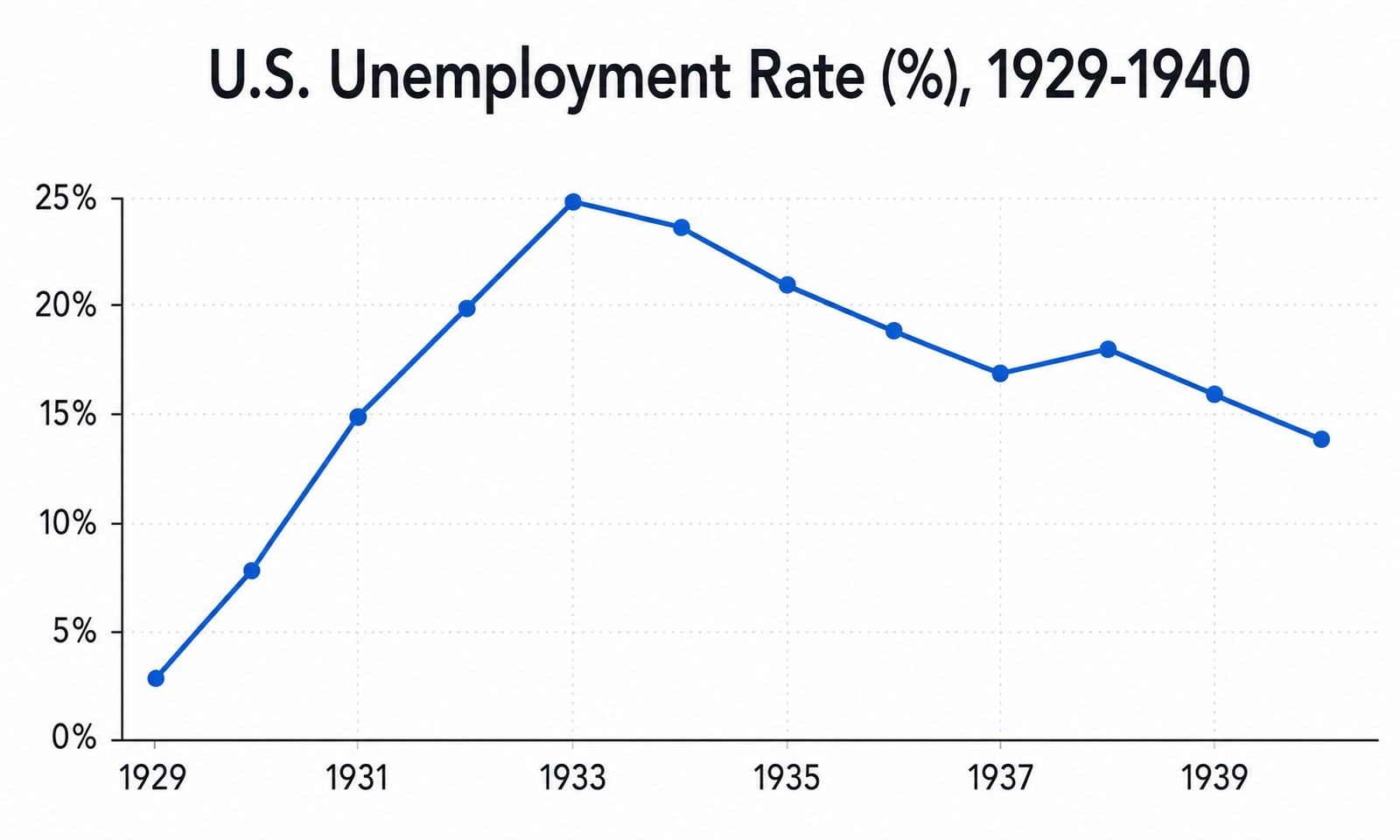
October 29, 1929——"Black Tuesday",股市一日蒸发 $14 billion(相当于今天约 $250 billion)。到1933年,失业率达到 25%,银行倒闭,四分之一的美国家庭失去收入。
大萧条为何发生
- 股市投机 — 借款保证金交易使股价远超真实价值。
- 银行倒闭 — 股市崩盘后储户恐慌。当时尚无 FDIC。到1933年约 9,000 家银行倒闭,储户存款被吞没。
- 紧缩货币政策 — Federal Reserve 未放松反而收紧信贷,让危机雪上加霜。
- Smoot-Hawley Tariff(1930年) — 提高进口关税以保护本国工业;他国报复,全球贸易崩溃。
- Dust Bowl (1930s) — 严重干旱加上过度耕种摧毁了 Great Plains 的农业。250万 Okies 西迁。
New Deal (1933-1939)
Franklin D. Roosevelt 在1932年大选中以"a new deal for the American people"(给美国人民的新契约)为口号获胜。就任前100天,国会通过了空前的法案。New Deal 的核心是 三个 R:
Relief、Recovery、Reform
- Relief(救济) 面向失业者 → Civilian Conservation Corps (CCC)、Works Progress Administration (WPA)——在环境保护、公共工程和艺术领域直接提供岗位。
- Recovery(复苏) 面向企业 → National Recovery Administration (NRA)、Agricultural Adjustment Act (AAA)。
- Reform(改革) 预防未来危机 → Securities and Exchange Commission (SEC)、Federal Deposit Insurance Corporation (FDIC)、Social Security Act(社会保障法,1935)。
New Deal 并未彻底结束大萧条——真正终结它的是 WWII。但它永久改变了联邦政府的角色,建立起美国人至今仍依赖的社会安全网。
自我检查
快速检查 #1
大萧条期间美国失业率在哪一年达到峰值?
1933年——Roosevelt 就任第一年——失业率约为25%。New Deal 项目在1930年代逐步降低失业率,但直到1940年代初 WWII 动员前仍高于10%。
快速检查 #2
哪个 New Deal 项目建立了今天美国人仍在使用的联邦退休与残疾保障网?
1935年的 Social Security Act 建立了养老金、失业保险与残疾援助制度,是 New Deal 最持久的遗产。