殖民地基础:三大区域及地理为何至关重要
13个美洲殖民地分为三个不同区域——新英格兰(New England)、中部(Middle)、南部(Southern)——各有不同的气候、地理和经济。掌握这些区域和塑造定居形态的地理特征。


先地理,后历史
在你们能够理解美国独立革命(American Revolution)或南北战争(Civil War)之前,必须先理解美国人在何处定居以及为何如此。地理决定了殖民地居民能够种植什么、如何赚钱,甚至他们建立了什么样的社会。德州美国史 CBE 每次考试至少有一道题涉及三个殖民地区域——只要掌握基础知识,几乎总是白送分。
三个殖民地区域
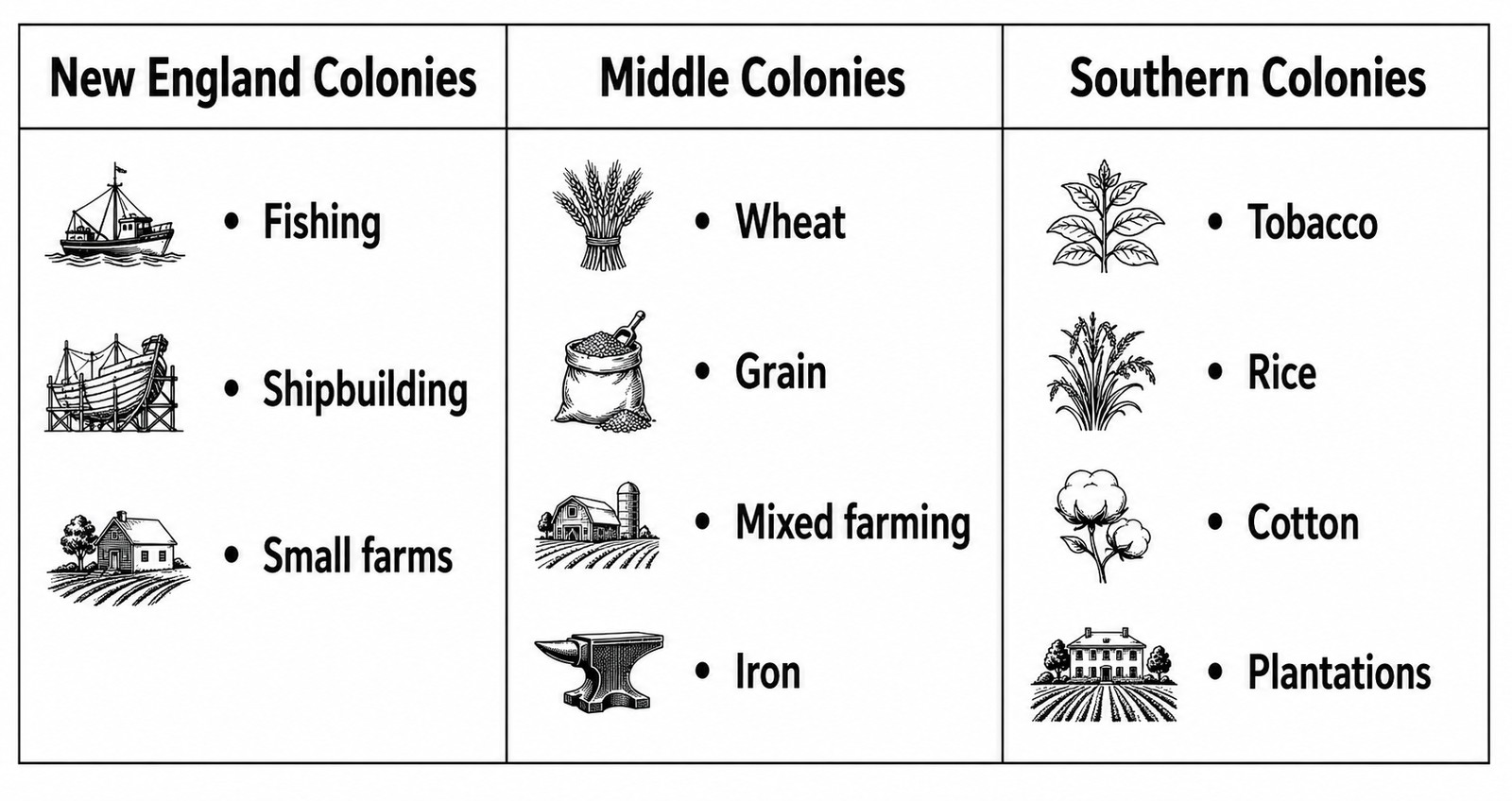
记住这些区域
- 新英格兰(New England)(Massachusetts, Connecticut, Rhode Island, New Hampshire)——土壤多石、冬季寒冷 → 渔业、造船、小型农场。城镇围绕清教徒(Puritan)教堂建立。
- 中部殖民地(Middle Colonies)(New York, Pennsylvania, New Jersey, Delaware)——土壤肥沃、气候温和 → 小麦、谷物、混合农业、铁。被称为"面包篮"(the Breadbasket)。宗教多样。
- 南部殖民地(Southern Colonies)(Virginia, Maryland, the Carolinas, Georgia)——气候温暖、生长季长 → 烟草、稻米、靛蓝,后来是棉花。大型种植园由奴隶劳动力经营。
山脉之墙:阿巴拉契亚作为屏障
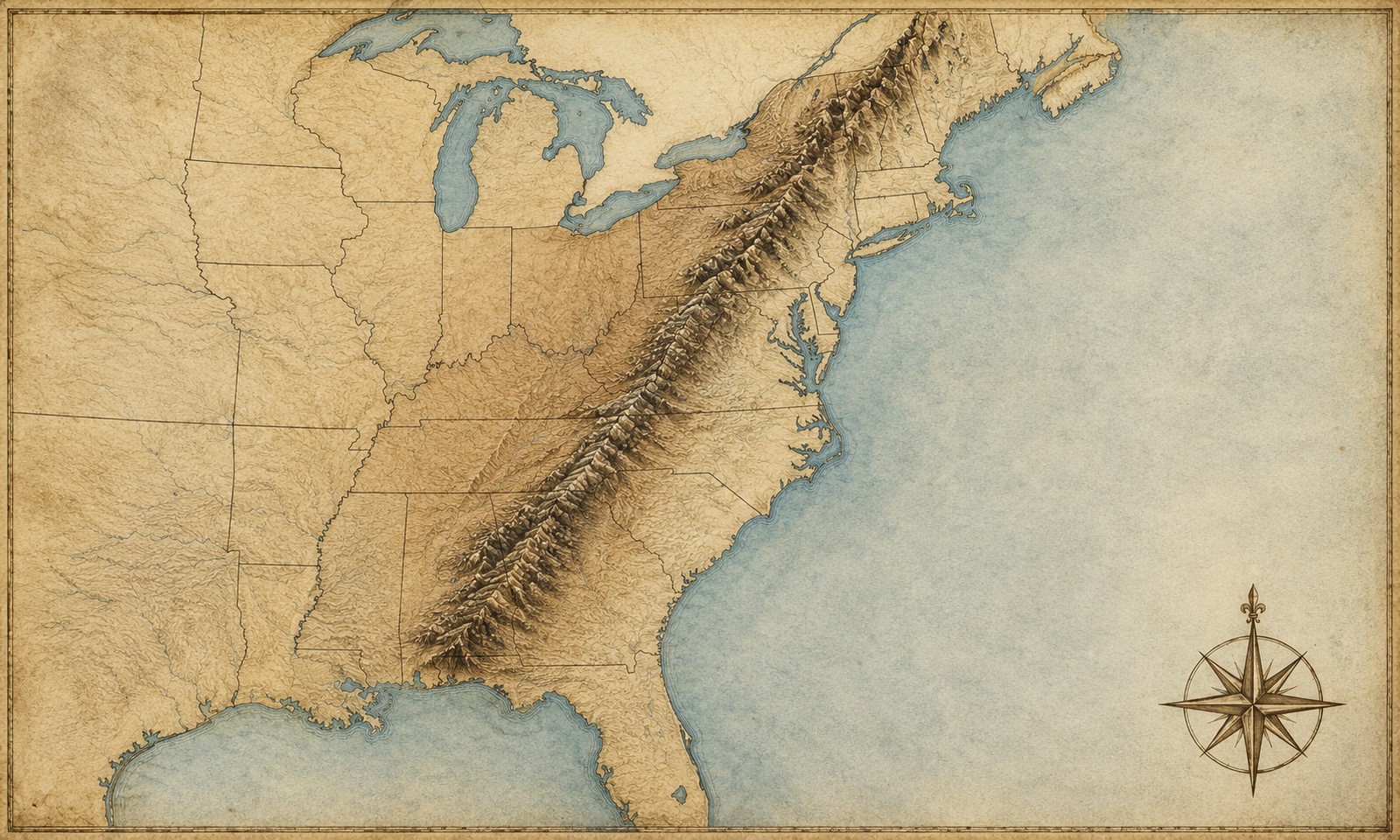
只要看任何殖民地时期的地图,就会注意到定居点被挤压在大西洋沿岸的一条狭长地带上。这是因为阿巴拉契亚山脉(Appalachian Mountains)像一堵墙从北到南延伸,阻挡了向西扩张,直到公路和铁路最终穿越它们。塑造早期美国的其他地理特征:
- 大西洋沿岸平原(Atlantic Coastal Plain)——平坦、肥沃、易于定居 → 大多数早期殖民地都紧贴这条带状区域。
- 密西西比河(Mississippi River)水系——后来成为西部扩张的通衢(1803年路易斯安那购地案打开了它)。
- 五大湖(Great Lakes)——与加拿大之间的天然屏障,也是未来的航运动脉。
自我检查
快速检查 #1
哪个殖民地区域因谷物和小麦生产被称为"面包篮"(Breadbasket)?
中部殖民地(NY, PA, NJ, DE)拥有肥沃的土壤和适合谷物生长的温和气候。小麦出口使它们成为殖民地的"面包篮"(Breadbasket)。
快速检查 #2
哪一地理特征在1600年代和1700年代初最显著地限制了向西定居?
阿巴拉契亚山脉像一堵墙南北延伸。在公路和河流穿越它们之前,大多数定居者都留在东边——这就是早期各州沿海岸聚集的原因。