工业革命与移民:从Cotton Gin到Ellis Island
1790至1920年间,美国由农业国转变为工业强国。掌握关键发明、移民浪潮以及他们建立的城市。


一次工业化的蜕变
1800年,80%的美国人从事农业;到1920年,这一比例已不足30%。推动这场转变的三股力量:发明家、移民与基础设施。
改变一切的发明
必须掌握的五项发明
- Cotton Gin(轧棉机) (Eli Whitney, 1793) — 分离棉纤维与棉籽的速度提升50倍,让棉花成为南方农业的王者;不幸的是也巩固了奴隶制。
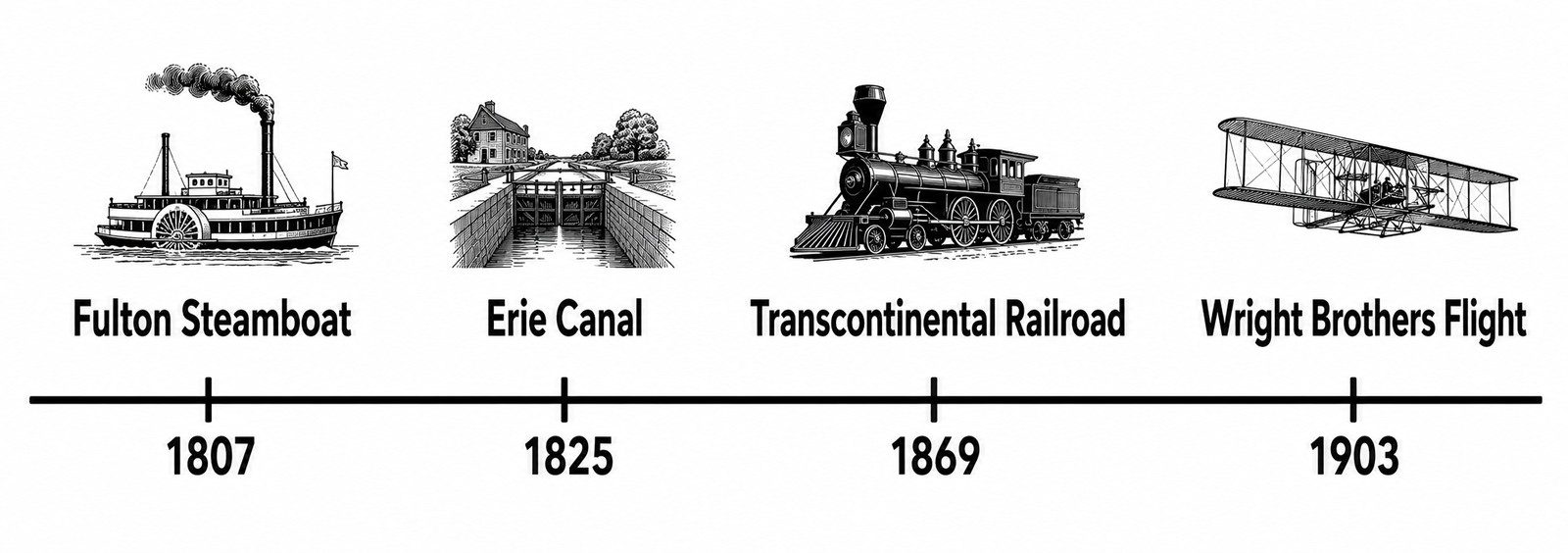
- Steamboat(蒸汽船) (Robert Fulton, 1807) — 将逆流河道变成高速公路。
- Telegraph(电报) (Samuel Morse, 1840s) — 首次实现即时长距离通信。1844年发出"What hath God wrought"。
- Transcontinental Railroad(横贯大陆铁路)(1869年在 Promontory Summit, Utah 完工)— 连接美国东西海岸,将横跨大陆的旅程从6个月缩短到6天。
- Assembly Line(装配线) (Henry Ford, 1913) — 让 Model T 成为中产工人也买得起的汽车,单车生产时间从12小时降到90分钟。
大移民浪潮
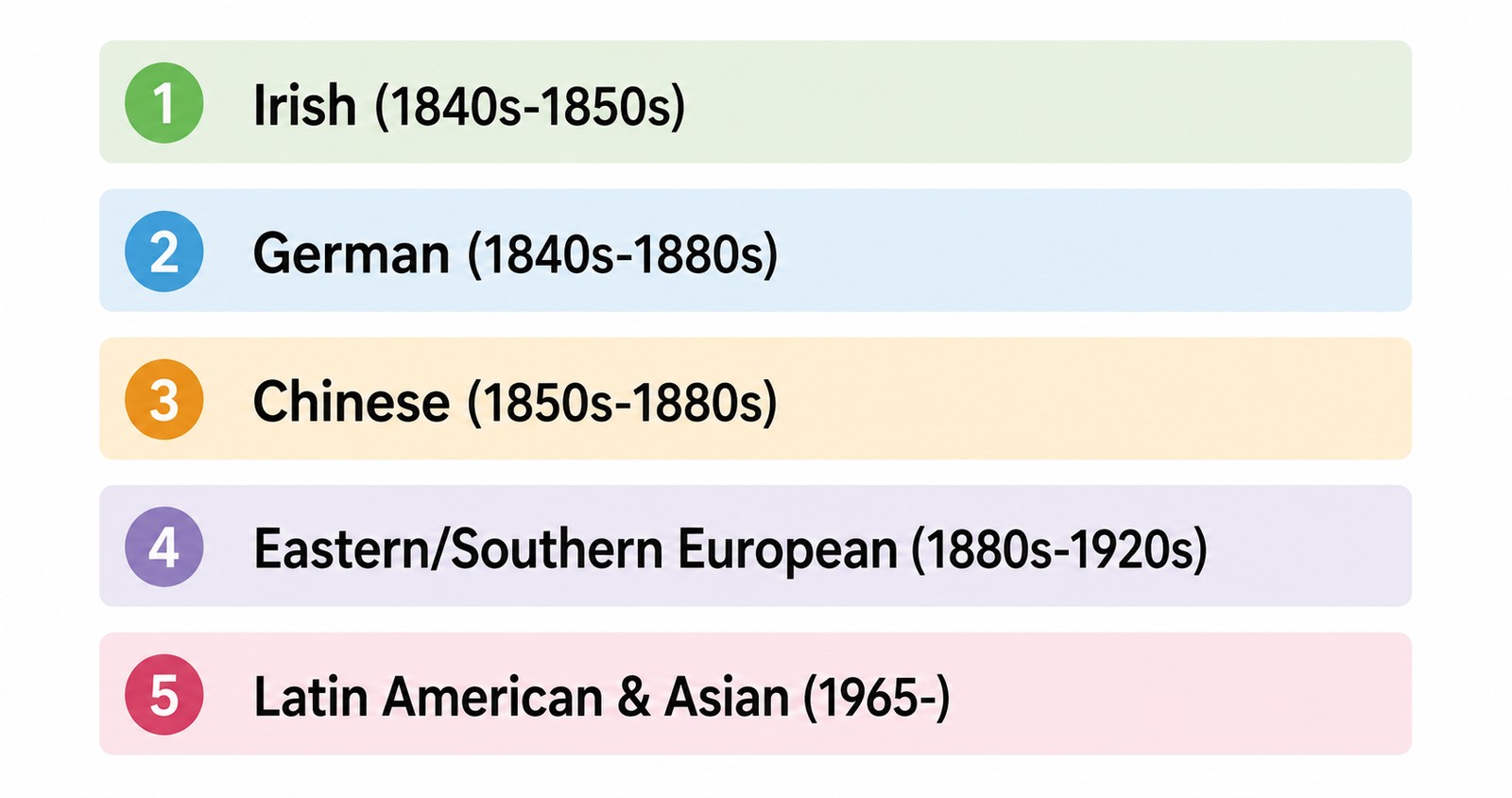
- 爱尔兰移民 (1840s-1850s) — Irish Potato Famine(爱尔兰马铃薯大饥荒)造成 Ireland 一百万人死亡,另外一百万人逃离,主要抵达 Boston、New York 等美国城市。
- 德国移民 (1840s-1880s) — 1848年欧洲革命后的政治动荡与经济机会推动移民。多数定居中西部。
- 华人移民 (1850s-1880s) — 起初被 California Gold Rush 吸引,后来参与 Transcontinental Railroad 建设。遭遇严重歧视,最终演变为 Chinese Exclusion Act(1882年排华法案)。
- 东欧与南欧 (1880s-1920s) — 意大利人、波兰人、俄罗斯人、逃离 pogrom 的犹太人,从 Ellis Island 进入美国。1920年,14% 的美国人出生于外国。
- 拉丁美洲与亚洲 (1965-) — 1965年 Immigration Act 取消了国籍配额,移民来源由欧洲转向亚洲与拉丁美洲。
自我检查
快速检查 #1
1793年谁发明了 cotton gin?
Eli Whitney 的 cotton gin(1793年)使棉花加工速度提高50倍。它改变了南方经济——但也悲剧性地扩大了奴隶制,因为更多棉花意味着对奴隶劳动的更多需求。
快速检查 #2
1840年代爱尔兰人移民美国的主要原因是什么?
Great Famine(1845-1852)造成 Ireland 约一百万人死亡,迫使另一百万人移民海外,大多定居于 Boston、New York、Philadelphia 等美国港口城市。