Màng tế bào và vận chuyển: Vật chất ra vào bằng cách nào
Màng tế bào là ranh giới quyết định thứ gì vào và thứ gì ra. Các em hãy nắm vững lớp kép phospholipid, protein vận chuyển, thẩm thấu, khuếch tán và vận chuyển chủ động trong một bài học tập trung duy nhất.


Màng tế bào là hàng rào thông minh, không phải bức tường
Màng tế bào quyết định thứ gì vào và ra khỏi tế bào. Trông đơn giản nhưng cùng lúc làm năm việc: là rào chắn, chốt kiểm soát, bộ nhận tín hiệu, nhãn nhận dạng và trung tâm vận chuyển. Hai đặc điểm cấu trúc làm mọi thứ đó khả thi — và cả hai đều được kiểm tra trực tiếp trên CBE.
Lớp kép phospholipid
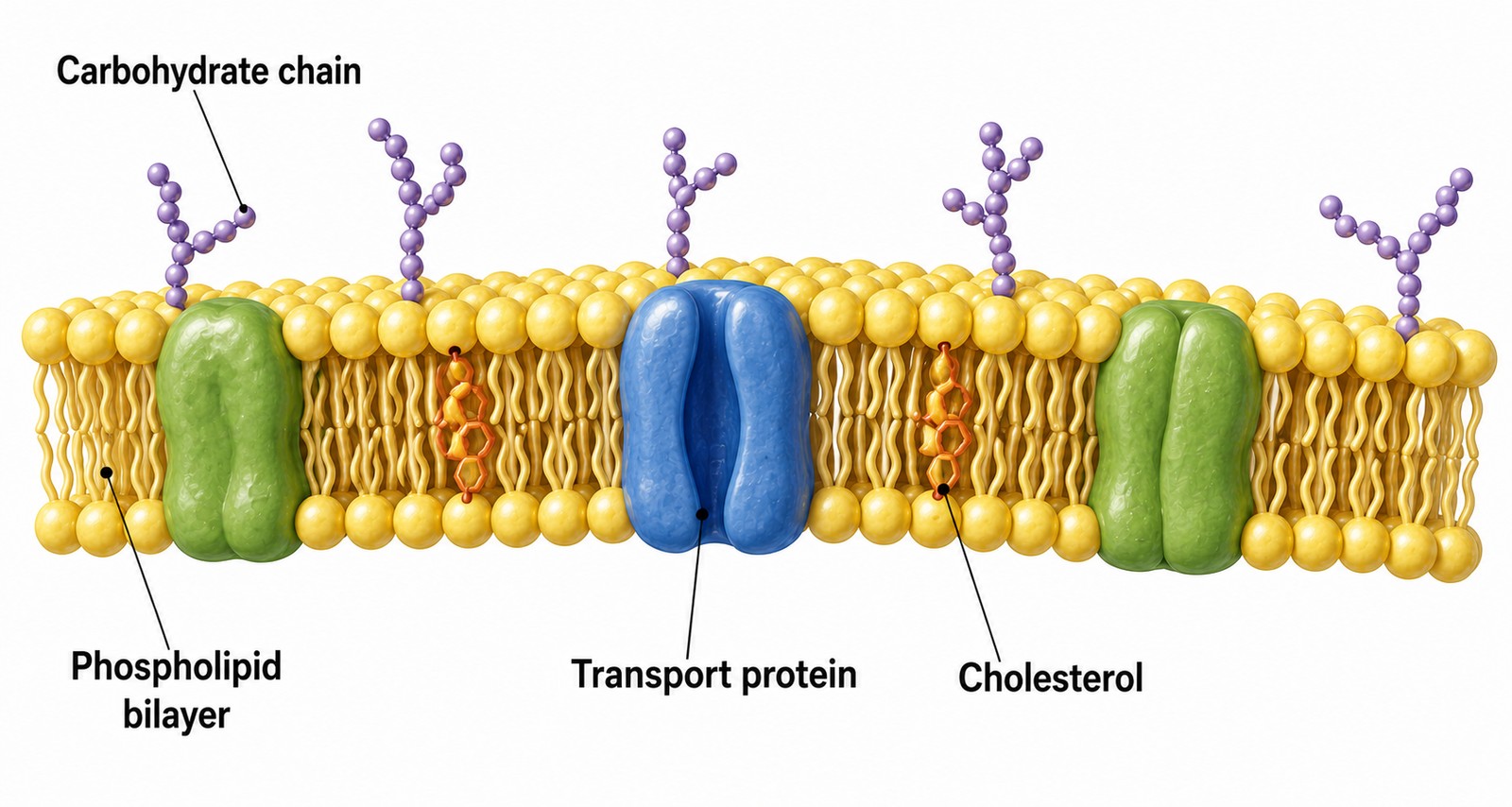
Mọi màng tế bào đều được tạo nên từ hai lớp phospholipid. Mỗi phospholipid có:
- Một đầu ưa nước (thích nước) — quay ra ngoài, hướng về môi trường nước.
- Hai đuôi kỵ nước (né nước) — quay vào trong, hướng vào nhau.
Kết quả là một chiếc "bánh mì kẹp": đầu bên ngoài, đuôi bên trong. Chỉ riêng lớp kép này đã chặn mọi thứ lớn hoặc mang điện tích. Các phân tử nhỏ không tích điện (oxy, carbon dioxide, nước) lọt qua; ion và phân tử lớn thì không.
Protein vận chuyển lấp vào những khoảng trống
Riêng lớp kép không thể vận chuyển ion, đường hay axit amin. Đó là lúc protein vận chuyển vào cuộc. Chúng xuyên qua lớp kép và đóng vai trò như kênh hoặc bơm:
- Protein kênh — lối đi mở cho các phân tử cụ thể lưu thông (thụ động).
- Protein mang — gắn phân tử ở một phía rồi thả ra ở phía kia.
- Bơm — dùng ATP để đưa phân tử đi ngược gradient nồng độ.
Sự kết hợp — lớp kép phospholipid + protein vận chuyển — làm cho màng có tính thấm chọn lọc. Cụm từ đó xuất hiện nguyên văn trên CBE.
Khuếch tán vs. thẩm thấu vs. vận chuyển chủ động
Ba từ về dung dịch phải nhớ
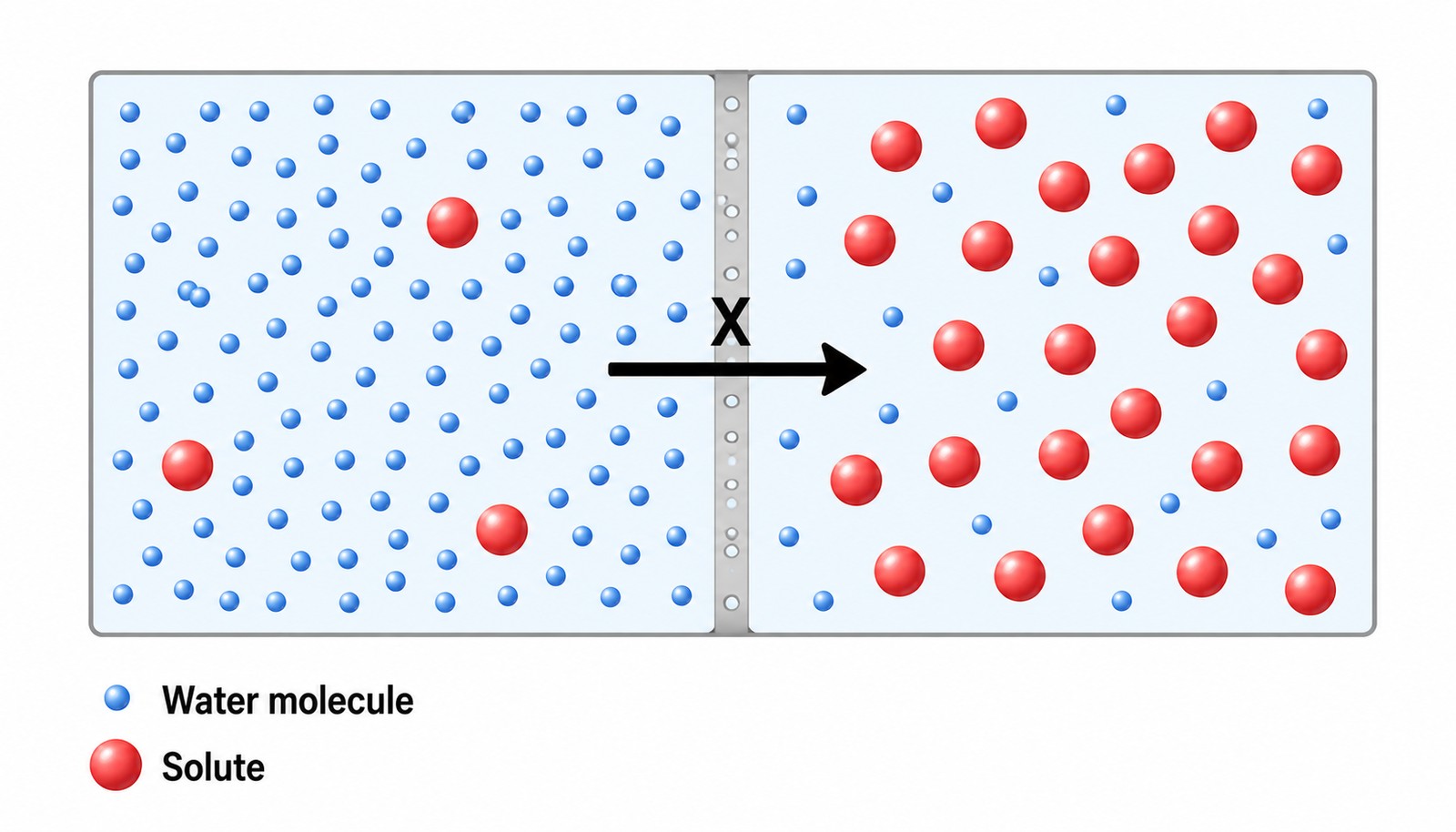
- Nhược trương (Hypotonic) — bên ngoài tế bào có ít chất tan hơn. Nước tràn vào. Tế bào phồng lên (và có thể vỡ).
- Ưu trương (Hypertonic) — bên ngoài có nhiều chất tan hơn. Nước tràn ra. Tế bào co lại.
- Đẳng trương (Isotonic) — chất tan bằng nhau. Không có sự dịch chuyển nước ròng. Tế bào giữ nguyên kích thước.