민권운동과 현대 미국: Brown v. Board에서 오늘까지
1954년부터 1968년까지 Civil Rights Movement는 법적 인종분리를 해체하고 투표권을 확장했습니다. 주요 판결, 지도자, 법률과 그 이후 이민·기술의 변화를 정복하세요.


평등, 마침내 성문화되다
14th·15th Amendments(1868, 1870)이 아프리카계 미국인에게 시민권과 투표권을 부여했지만, Jim Crow laws가 그 권리 대부분을 실질적으로 박탈했습니다. 1954-1968년의 Civil Rights Movement는 법정, 거리, 그리고 의회를 통해 마침내 평등을 실현했습니다.
Civil Rights 주요 사건
일곱 순간으로 본 운동
- Brown v. Board of Education (1954) — Supreme Court가 학교 인종분리는 위헌이라 판결하며 Plessy v. Ferguson(1896)의 "separate but equal(분리하되 평등)"을 뒤집었습니다.
- Montgomery Bus Boycott (1955-56) — Rosa Parks가 버스 좌석 양보를 거부한 사건이 계기가 되어, 젊은 목사 Martin Luther King Jr.가 이끈 381일의 불매운동이 시작되었습니다.
- Little Rock Nine (1957) — 연방 군대가 아홉 명의 흑인 학생을 호위해 Arkansas의 Central High School에 입학시켰습니다.
- March on Washington (1963) — 25만 명이 일자리와 자유를 요구하며 행진했습니다. MLK는 "I Have a Dream" 연설을 했습니다.
- Civil Rights Act(민권법, 1964) — 고용, 공공시설, 학교에서 인종, 피부색, 종교, 성별, 출신 국가에 근거한 차별을 금지했습니다.
- Voting Rights Act(투표권법, 1965) — 남부에서 흑인 투표를 억압하는 데 쓰인 문해력 시험 등의 장치를 금지했습니다.
- MLK 암살 (April 4, 1968) — Memphis에서 발생했습니다. 폭동을 촉발했고 Fair Housing Act(공정주거법, 1968) 통과를 앞당겼습니다.
1965년 이후의 현대 미국
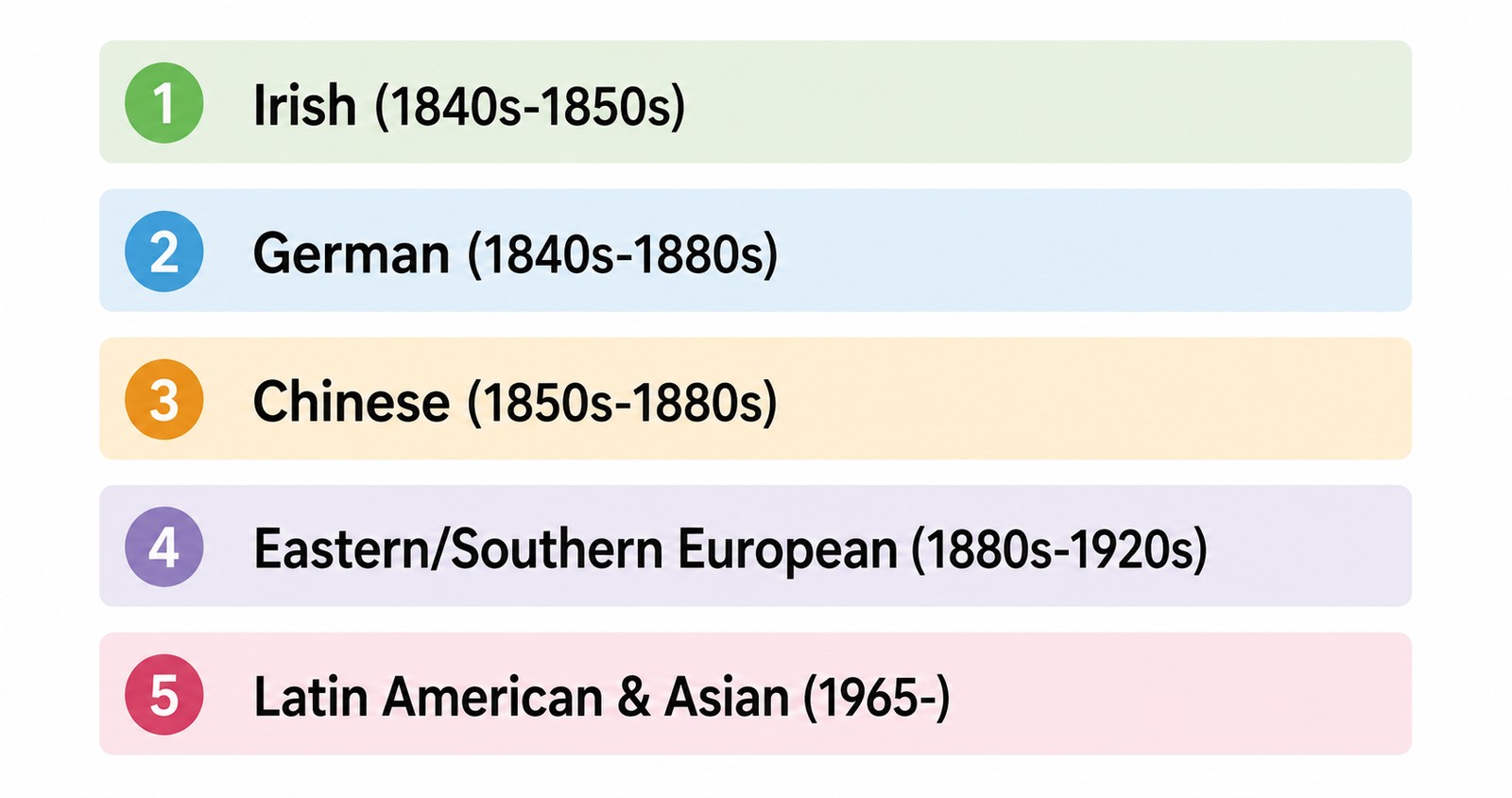
- Immigration Act of 1965(1965년 이민법) — 인종·국적별 쿼터를 폐지했습니다. 이민의 중심이 유럽에서 아시아와 중남미로 이동했으며, 2020년에는 약 14%의 미국인이 외국 태생으로 1920년 수준과 같아졌습니다.
- Space Race 승리 (1969) — Apollo 11이 Neil Armstrong과 Buzz Aldrin을 달에 착륙시켜 1961년 JFK의 도전을 이루었습니다.
- Watergate (1972-74) — Democratic National Committee 본부 침입 사건과 은폐가 Nixon의 사임으로 이어졌습니다. 미국 최초의 대통령 사임이었습니다.
- Cold War 종식 (1989-1991) — Berlin Wall이 무너지고 Soviet Union이 해체되며 미국은 유일한 초강대국이 되었습니다.
- 인터넷 혁명 (1990s-) — World Wide Web(1991) → Amazon, Google, Apple, 소셜미디어가 경제를 바꾸었습니다.
- 9/11 (2001) — Al-Qaeda의 World Trade Center와 Pentagon 공격으로 약 3,000명이 사망했습니다. Afghanistan(2001-2021)과 Iraq(2003-2011) 전쟁의 계기가 되었습니다.
스스로 확인해 봅시다
빠른 점검 #1
Brown v. Board of Education (1954)의 판결 내용은 무엇입니까?
Brown v. Board은 Plessy v. Ferguson(1896)을 뒤집고, "separate educational facilities are inherently unequal(분리된 교육시설은 본질적으로 불평등하다)"라며 만장일치로 공립학교의 법적 인종분리를 무너뜨렸습니다.
빠른 점검 #2
1964년 Civil Rights Act는 무엇을 했습니까?
Johnson 대통령이 July 2, 1964에 서명한 이 법은 고용, 학교, 공공시설에서의 차별을 금지했습니다. Voting Rights Act가 1965년 뒤이어 제정되었습니다.