남북전쟁과 재건: Fort Sumter에서 13차 수정헌법까지
남북전쟁(1861-1865)은 미국 역사상 가장 피비린내 나는 전쟁이었습니다. 원인, 주요 전투, Lincoln의 리더십, 그리고 그 후 이어진 재건(Reconstruction) 시대의 수정헌법들을 반드시 익혀두세요.


분열된 나라
1860년까지 미국은 두 개의 미국이 되어 있었습니다: 산업화된 북부와 노예 기반 농업의 남부. Lincoln이 남부의 선거인단 표를 단 한 표도 얻지 못한 채 대통령에 당선되자, 11개 주가 연방을 탈퇴했습니다. 이어진 전쟁은 베트남 전쟁 이전까지 미국이 치른 다른 모든 전쟁을 합친 것보다 더 많은 미국인을 사망하게 했습니다.
북부가 승리한 이유
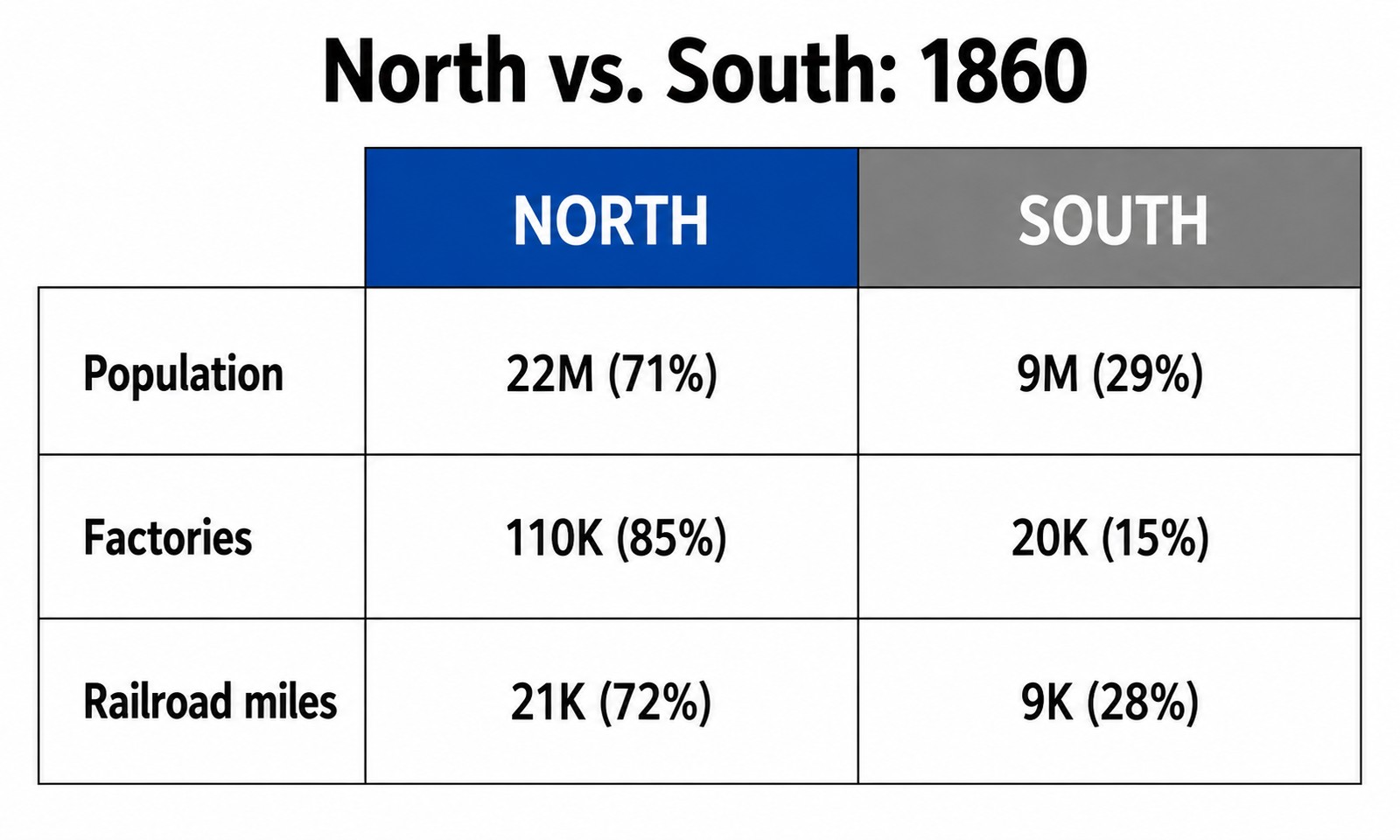
북부의 압도적인 산업 능력 — 공장의 85%, 철도 마일리지의 72%, 인구는 두 배 이상 — 이 결정적이었습니다. 남부는 더 뛰어난 장군들(특히 Robert E. Lee)과 홈그라운드의 이점을 가지고 있었지만, 무기 제조, 병력 수송, 손실 보충에 있어 북부의 능력을 따라잡을 수 없었습니다.
주요 사건
다섯 사건으로 보는 전쟁
- Fort Sumter (1861년 4월) — 남부 연합의 대포가 Charleston 항구에 있는 이 북부 연방 요새를 향해 발사되었습니다. 전쟁의 공식적인 시작입니다.
- Antietam 전투 (1862) — 미국 역사상 하루 최다 사상자가 발생한 전투. 북부의 전략적 승리로 Lincoln이 노예해방선언(Emancipation Proclamation)을 발표할 수 있게 되었습니다.
- 노예해방선언(Emancipation Proclamation, 1863년 1월) — Lincoln은 남부 연합 지배 영토의 모든 노예를 자유인으로 선언했습니다. 전쟁을 노예제에 맞선 투쟁으로 재정의했습니다.
- Gettysburg 전투 (1863년 7월) — 전쟁의 전환점. Pennsylvania로 진격한 남부 연합의 침공이 격퇴되었습니다. 그해 11월에 Lincoln의 Gettysburg 연설이 이어졌습니다.
- Appomattox (1865년 4월) — Lee가 Grant에게 항복했습니다. 전쟁은 사실상 끝났습니다.
재건 수정헌법(Reconstruction Amendments)
전쟁 후, 세 개의 헌법 수정안이 미국을 변화시켰습니다:
- 13차 수정헌법 (1865) — 미국 전역에서 노예제를 폐지했습니다.
- 14차 수정헌법 (1868) — 미국에서 태어난 모든 사람(과거 노예였던 사람 포함)에게 시민권과 "법의 평등한 보호(equal protection of the laws)"를 부여했습니다.
- 15차 수정헌법 (1870) — "인종, 피부색, 이전의 예속 상태"와 관계없이 투표권을 보장했습니다.
재건 시대(Reconstruction, 1865-1877)는 남부 주들과 해방된 아프리카계 미국인들을 시민 생활에 통합하려고 시도했습니다. 대체로 실패했습니다. 1877년까지 연방군은 철수했고, 남부 주들은 이후 90년 동안 인종 분리를 강제하는 Jim Crow 법들을 통과시키기 시작했습니다.
스스로 점검해 보세요
빠른 확인 #1
1861년 4월 남북전쟁은 어디에서 시작되었습니까?
1861년 4월 12일 남부 연합군은 Charleston 항구의 Fort Sumter에 포격을 가했습니다. 요새는 34시간 후 항복했고, 전쟁이 시작되었습니다.
빠른 확인 #2
미국에서 노예제를 폐지한 수정헌법은 무엇입니까?
13차 수정헌법(1865)은 노예제를 폐지했습니다. 14차(1868)는 시민권과 평등한 보호를 부여했습니다. 15차(1870)는 투표권을 보호했습니다. 이 셋을 통틀어 "재건 수정헌법(Reconstruction Amendments)"이라고 부릅니다.