제2차 세계대전에서 냉전까지: Pearl Harbor에서 Berlin Wall까지
Pearl Harbor(1941)부터 Berlin Wall 붕괴(1989)까지, 미국은 열전과 냉전을 모두 치렀습니다. 두 시기의 주요 사건을 정복하세요.


두 개의 전쟁, 한 세기
제2차 세계대전(WWII)은 4년간(1941-1945) 이어졌고 전 세계에서 약 6천만 명의 목숨을 앗아갔습니다. 뒤이은 Cold War(냉전)는 44년간(1947-1991) 지속되었으며 20세기 후반 미국 외교 정책의 거의 모든 측면을 형성했습니다.
제2차 세계대전 (1941-1945)
WWII 핵심 사항
- Pearl Harbor (Dec 7, 1941) — 하와이의 미 해군 기지에 대한 일본의 공중 공격입니다. FDR는 이를 "a date which will live in infamy(치욕으로 기억될 날)"라고 불렀습니다. 미국은 다음 날 전쟁에 참전했습니다.
- D-Day (June 6, 1944) — 프랑스 Normandy 상륙작전입니다. 역사상 최대 규모의 상륙 작전(약 156,000명 병력)이었으며, 서유럽 해방의 시작이었습니다.
- 원자폭탄 (Aug 1945) — Hiroshima(Aug 6)와 Nagasaki(Aug 9). 일본은 Aug 15에 항복했습니다.
- Holocaust(홀로코스트) — Nazi Germany는 약 600만 명의 유대인과 약 500만 명(집시, 장애인, 소련 전쟁포로, 정치범 등)을 학살했습니다. 1945년 연합군이 강제수용소를 해방하면서 실상이 드러났습니다.
- United Nations(국제연합, 1945년 창설) — 국제 평화를 유지하고 또 다른 세계대전을 방지하기 위해 만들어졌습니다. 실패한 League of Nations를 대체했습니다.
냉전 (1947-1991)
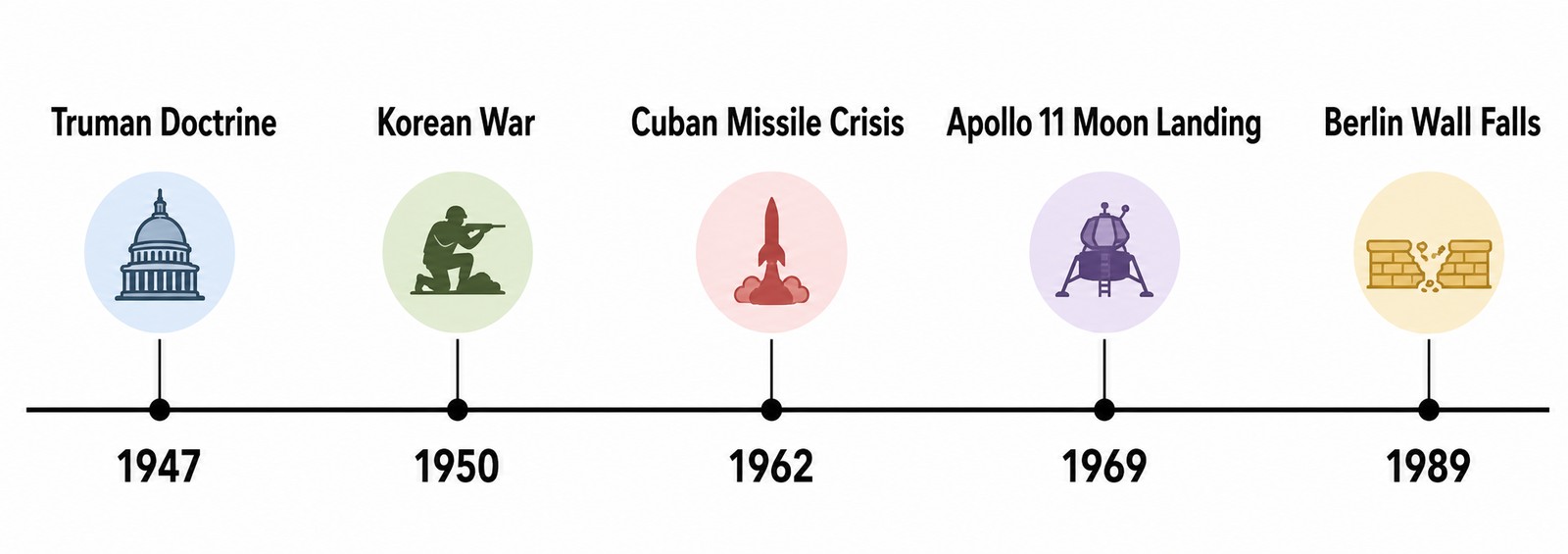
WWII 이후, 최근까지 동맹이었던 미국과 Soviet Union은 지정학적 경쟁자가 되었습니다. 양국 모두 핵무기를 보유하고 있었기 때문에 직접 전쟁은 상상할 수 없었고, 갈등은 대리전, 첩보, 선전, 우주 경쟁으로 전개되었습니다.
- Truman Doctrine(트루먼 독트린, 1947) — 소련 공산주의에 저항하는 국가들을 미국이 지원하겠다고 약속했습니다. 40년에 걸친 봉쇄 정책의 시작이었습니다.
- Marshall Plan(마셜 플랜, 1948) — 서유럽 재건을 위한 $13 billion 규모의 원조입니다.
- Korean War(한국전쟁, 1950-1953) — 최초의 열전으로, 38선에서 교착 상태로 끝났습니다.
- Sputnik(1957) — 소련이 발사한 인공위성입니다. 미국은 큰 충격을 받고 과학 교육에 대대적인 투자를 하였으며 결국 NASA가 설립되었습니다.
- Cuban Missile Crisis(쿠바 미사일 위기, 1962) — 쿠바 내 소련 미사일을 둘러싸고 미국과 USSR가 핵전쟁 직전까지 갔던 13일간의 위기입니다.
- Vietnam War(베트남 전쟁, 1965-1973) — 미국 역사상 가장 분열적이었던 전쟁으로, 미국의 철수로 끝났습니다.
- Apollo 11(1969) — 미국은 인간을 달에 착륙시키며 Space Race에서 승리했습니다.
- Berlin Wall 붕괴(1989) — 냉전의 상징적 종말이며, Soviet Union은 1991년 해체되었습니다.
스스로 확인해 봅시다
빠른 점검 #1
Cold War 시기 미국과 USSR를 핵전쟁에 가장 가까이 데려간 사건은 무엇입니까?
October 1962, 미국 정찰기가 쿠바에서 소련 핵미사일을 발견했습니다. Kennedy는 해상 봉쇄를 실시했고 13일간 세계는 벼랑 끝에 서 있었습니다. Khrushchev가 물러남으로써 인류 역사상 가장 아슬아슬한 순간이 마무리되었습니다.
빠른 점검 #2
1945년 United Nations를 창설한 주된 목적은 무엇입니까?
WWII로 6천만 명이 사망한 후, 세계 지도자들은 3차 세계대전을 막기 위해 UN을 창설했습니다. UN은 무력했던 League of Nations를 대체했고, League 가입을 거부했던 미국에 Security Council 상임이사국 자리를 주었습니다.