건국 문서: 독립선언서, 연합규약, 헌법, 권리장전
네 개의 문서가 미국의 건국을 정의합니다: 독립선언서(Declaration of Independence, 1776), 연합규약(Articles of Confederation, 1781), 헌법(Constitution, 1787), 권리장전(Bill of Rights, 1791). 각 문서가 무엇을 했으며 왜 필요했는지 반드시 알아두세요.


네 개의 문서, 하나의 건국
미국의 건국은 단 15년 만에 네 개의 중요한 문서를 만들어냈습니다. 각 문서는 이전 문서가 만든 문제를 해결했습니다. CBE는 각 문서가 무엇을 이루었는지, 어떤 순서로 등장했는지를 아는 것을 기대합니다.
네 개의 문서
- 독립선언서(Declaration of Independence, 1776) — 주로 Thomas Jefferson이 작성했으며, 13개 식민지가 영국으로부터 독립했음을 선언했습니다. 유명한 서두: "우리는 다음 진리들을 자명한 것으로 여긴다. 모든 인간은 평등하게 창조되었다는 것을."
- 연합규약(Articles of Confederation, 1781) — 미국의 첫 번째 정부 형태. 연방 권한이 약했습니다: 세금을 부과할 수 없었고, 행정부도 없었으며, 국가 법원도 없었습니다. 10년도 되지 않아 실패했습니다.
- 미국 헌법(U.S. Constitution, 1787) — 연합규약을 대체했습니다. 연방 시스템을 창설했습니다: 의회는 과세할 수 있고, 대통령은 행정부를 이끌며, 대법원은 법을 해석합니다. Montesquieu의 권력분립(separation of powers)의 영향을 받았습니다.
- 권리장전(Bill of Rights, 1791) — 헌법에 대한 첫 10개 수정헌법입니다. 언론, 종교, 출판의 자유, 무기 소지 권리, 적법절차 등을 보장합니다.
연합규약이 실패한 이유
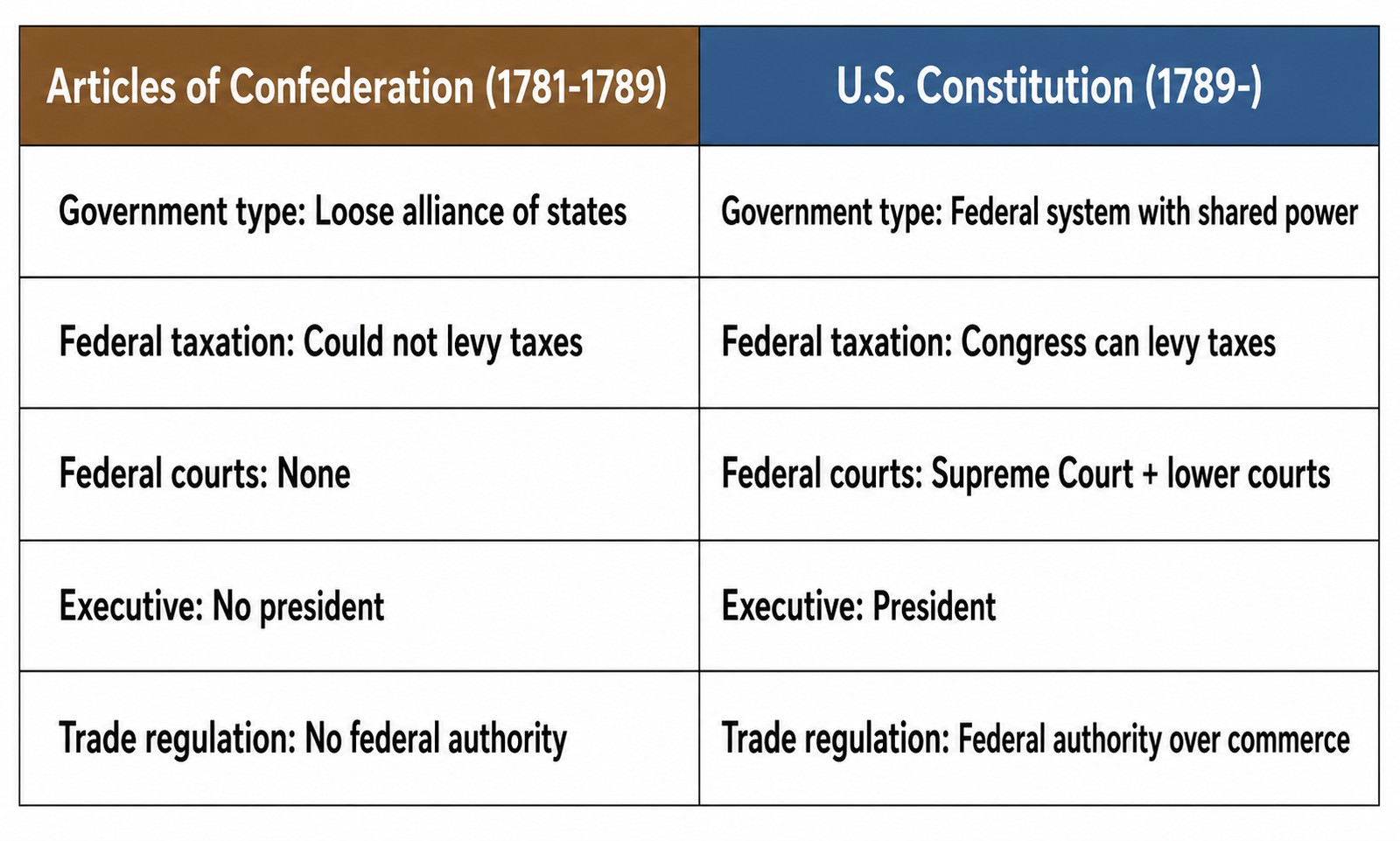
연합규약의 가장 치명적인 결함은 세금을 부과할 권한이 없었다는 점입니다. 의회는 독립전쟁 부채를 갚기 위해 각 주에 돈을 구걸해야 했습니다. 자금이 없으니 연방정부는 법을 집행하거나 군인들에게 급여를 지급할 수 없었습니다. 1786-87년 Shays의 반란(Shays' Rebellion) — Massachusetts 농민들의 봉기 — 은 연방정부가 국내 소요조차 방어할 수 없다는 것을 증명했습니다. 그것이 대표들에게 연합규약을 폐기하고 헌법을 작성하도록 확신을 심어주었습니다.
스스로 점검해 보세요
빠른 확인 #1
권리장전(Bill of Rights)은 헌법의 몇 개의 수정헌법으로 구성되어 있습니까?
1791년에 비준된 권리장전은 첫 10개 수정헌법입니다. 개인의 자유(언론, 종교, 출판, 집회, 적법절차)를 보장합니다. 오늘날 총 수정헌법은 27개이지만, 처음 10개만이 권리장전입니다.
빠른 확인 #2
연합규약의 어떤 약점이 헌법 작성으로 가장 직접적으로 이어졌습니까?
과세 권한이 없어서 의회는 독립전쟁 부채를 갚거나 군대에 자금을 지원할 수 없었습니다. Shays의 반란(1786-87)은 연방정부가 얼마나 무력한지를 보여주었습니다. 이는 헌법제정회의(Constitutional Convention)의 촉발점이 되었습니다.