Sinh thái học: chuỗi thức ăn, bậc dinh dưỡng và dòng năng lượng
Sinh vật sản xuất, tiêu thụ bậc 1, bậc 2, bậc 3 và sinh vật phân giải — cùng với quy tắc 10% kết nối chúng. Các em hãy nắm vững chuỗi thức ăn, lưới thức ăn và tháp năng lượng chỉ trong một bài học tập trung.


Năm nhóm sinh vật — chỉ vậy thôi
Các câu hỏi sinh thái trên CBE hầu như luôn quy về việc xác định sinh vật thuộc nhóm nào:
- Sinh vật sản xuất — thực vật và tảo. Tự tạo thức ăn bằng quang hợp.
- Sinh vật tiêu thụ bậc 1 — động vật ăn cỏ. Ăn sinh vật sản xuất.
- Sinh vật tiêu thụ bậc 2 — động vật ăn thịt/ăn tạp. Ăn tiêu thụ bậc 1.
- Sinh vật tiêu thụ bậc 3 — kẻ săn mồi đỉnh. Ăn tiêu thụ bậc 2.
- Sinh vật phân giải — vi khuẩn và nấm. Phân hủy xác sinh vật, trả chất dinh dưỡng lại cho đất.
Chuỗi thức ăn: một đường thẳng đơn lẻ
Chuỗi thức ăn là một lộ trình duy nhất của dòng năng lượng:
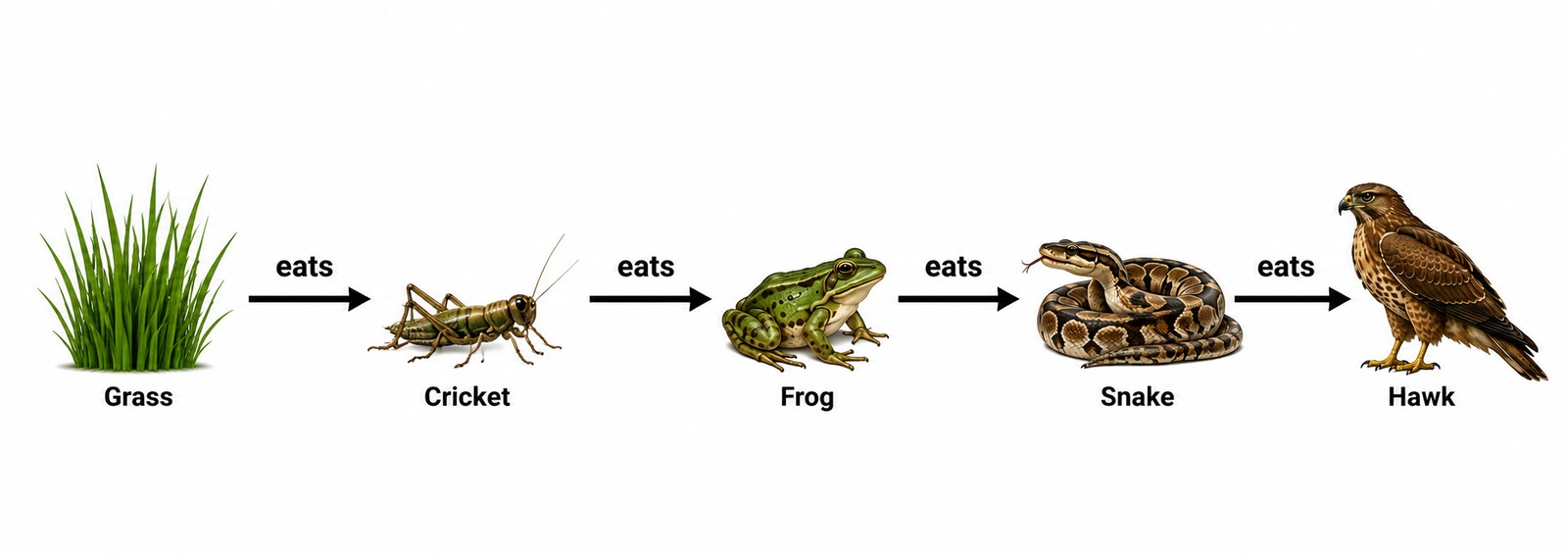
Cỏ → Dế → Ếch → Rắn → Diều hâu
- Cỏ = sinh vật sản xuất
- Dế = tiêu thụ bậc 1 (ăn cỏ)
- Ếch = tiêu thụ bậc 2 (ăn dế)
- Rắn = tiêu thụ bậc 3 (ăn ếch)
- Diều hâu = kẻ săn mồi đỉnh (ăn rắn)
Lưới thức ăn: nhiều chuỗi đan xen
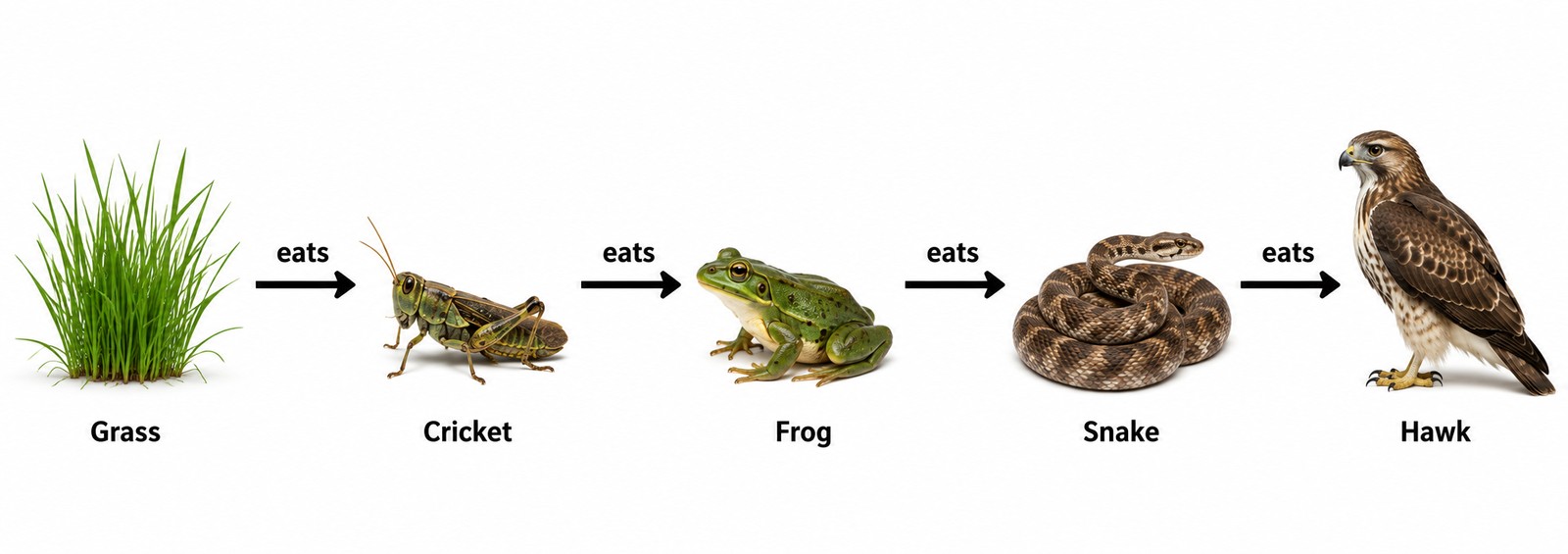
Lưới thức ăn là mạng lưới các chuỗi thức ăn chồng lấn. Một sinh vật có thể bị nhiều kẻ săn mồi ăn, và kẻ săn mồi thường ăn nhiều loài con mồi.
Câu hỏi hay gặp trên CBE: "Điều gì xảy ra nếu ếch bị loại khỏi hệ?" Muốn trả lời, các em phải theo dõi mũi tên theo cả hai hướng:
- Côn trùng (con mồi của ếch) — số lượng tăng vì không còn ai ăn chúng.
- Rắn (kẻ săn ếch) — số lượng giảm vì mất nguồn thức ăn.
Tháp năng lượng và quy tắc 10%
Chỉ khoảng 10% năng lượng ở một bậc dinh dưỡng được truyền lên bậc tiếp theo. 90% còn lại mất đi dưới dạng nhiệt, dùng cho trao đổi chất hoặc nằm trong phần không tiêu hóa được. Vì vậy chuỗi thức ăn hiếm khi dài quá 4–5 bậc — không còn đủ năng lượng.
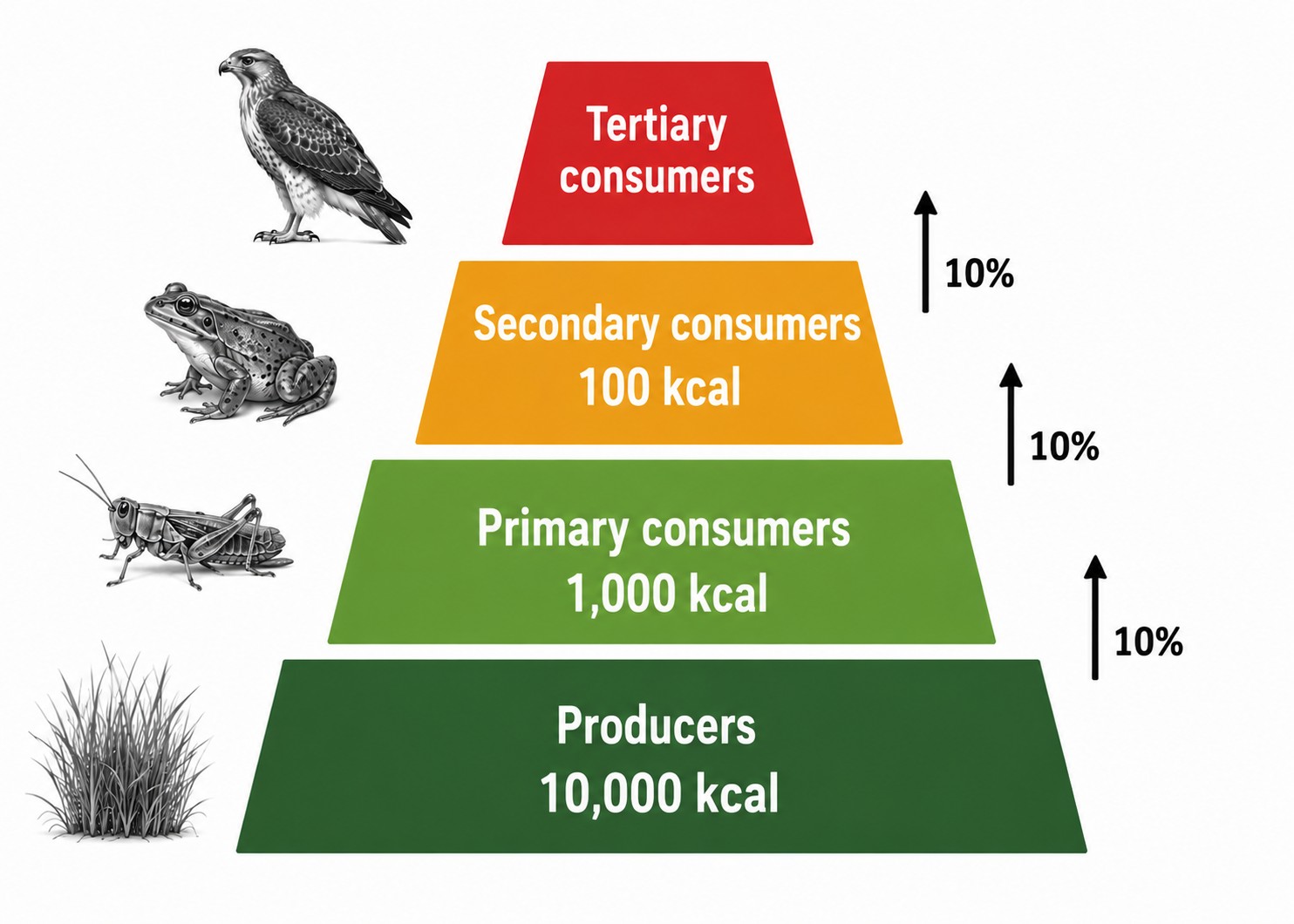
- Tiêu thụ bậc 1: 10.000 × 10% = 1.000 kcal
- Tiêu thụ bậc 2: 1.000 × 10% = 100 kcal
- Tiêu thụ bậc 3: 100 × 10% = 10 kcal
Cộng sinh: ba kiểu quan hệ
- Hỗ sinh (Mutualism) (+/+) — cả hai loài đều có lợi. Ong + hoa (ong lấy mật, hoa được thụ phấn).
- Hội sinh (Commensalism) (+/0) — một bên có lợi, bên kia không bị ảnh hưởng. Hàu bám trên cá voi.
- Ký sinh (Parasitism) (+/−) — một bên có lợi, bên kia bị hại. Sán dây trong người.
- Ăn thịt (Predation) (+/−) — kẻ săn ăn con mồi. Diều hâu + chuột.
Tự kiểm tra