Cấu trúc tế bào và bào quan: Hành trình bên trong tế bào
Mỗi kỳ Texas Biology CBE đều có ít nhất một câu hỏi nhận diện bào quan. Các em hãy nắm vững tám cấu trúc là nền tảng cho mọi câu hỏi sinh học tế bào — mỗi cấu trúc trông thế nào, làm nhiệm vụ gì, và tế bào thực vật khác tế bào động vật ở điểm nào.


Vì sao bào quan chiếm ưu thế trong kỳ thi này
Khoảng 15% đề Texas Biology CBE kiểm tra kỹ năng nhận diện bào quan — hoặc bằng tên gọi (“Bào quan nào tạo ra ATP?”) hoặc bằng hình ảnh (“Bào quan được ký hiệu X là…”). Tin vui: các em chỉ cần biết tám cấu trúc, và hầu hết mỗi cấu trúc có một đặc điểm dễ nhận ra ở bất kỳ sơ đồ nào.
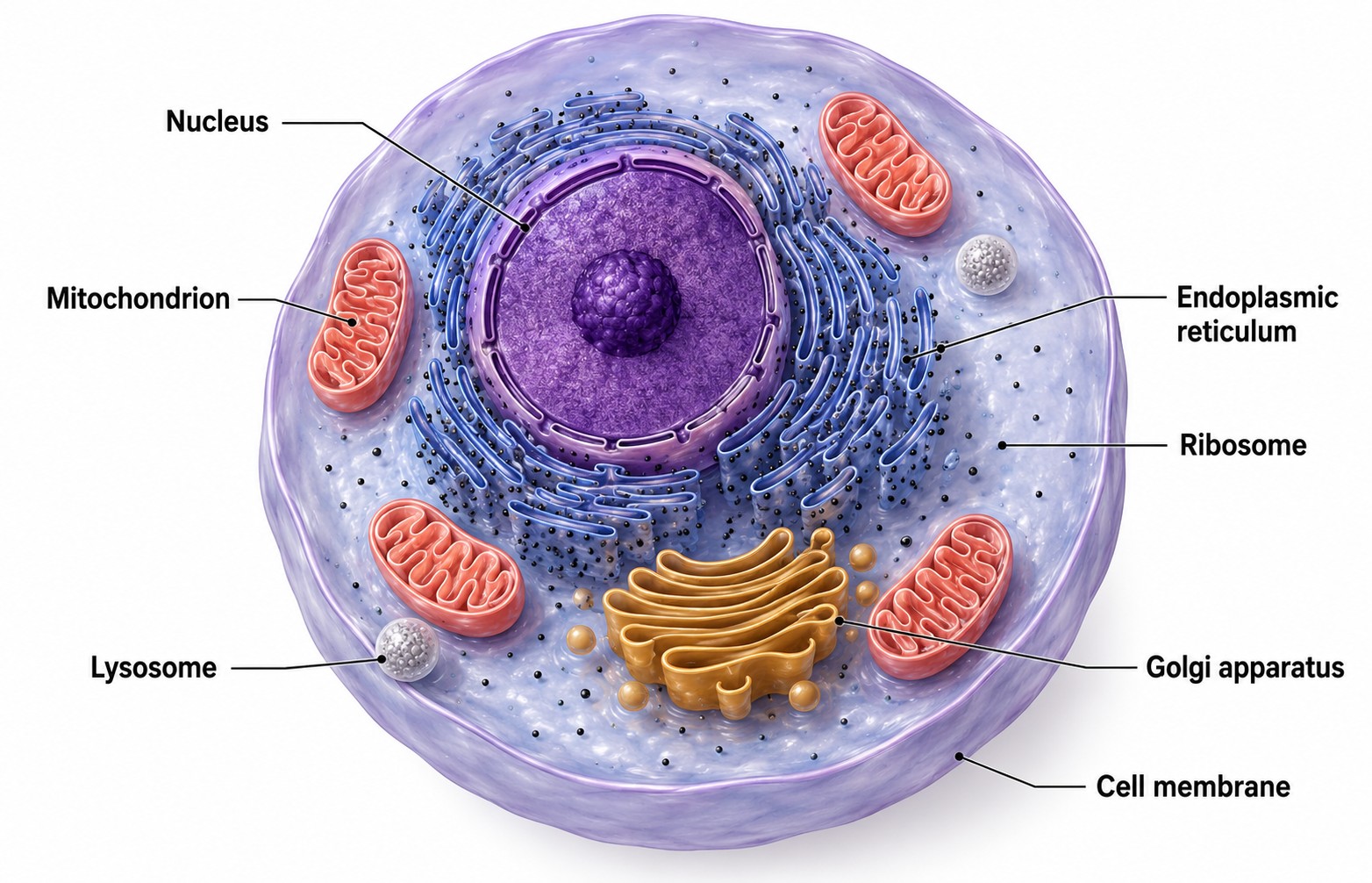
- Nhân (Nucleus) — cấu trúc lớn, tròn, có tâm sẫm màu (hạch nhân). Lưu trữ DNA.
- Ty thể (Mitochondrion) — hình hạt đậu với các nếp gấp bên trong (mào ty thể). Tạo ra ATP.
- Mạng lưới nội chất (ER) — mạng màng ngoằn ngoèo. ER hạt có ribosome bám trên bề mặt.
- Bộ máy Golgi — chồng các túi dẹt cong. Đóng gói protein.
- Ribosome — những chấm nhỏ trên ER hoặc trôi tự do. Tổng hợp protein.
- Lysosome — túi nhỏ, tròn. Phân giải chất thải.
- Màng tế bào — ranh giới mỏng ngoài cùng của mọi tế bào. Kiểm soát ra/vào.
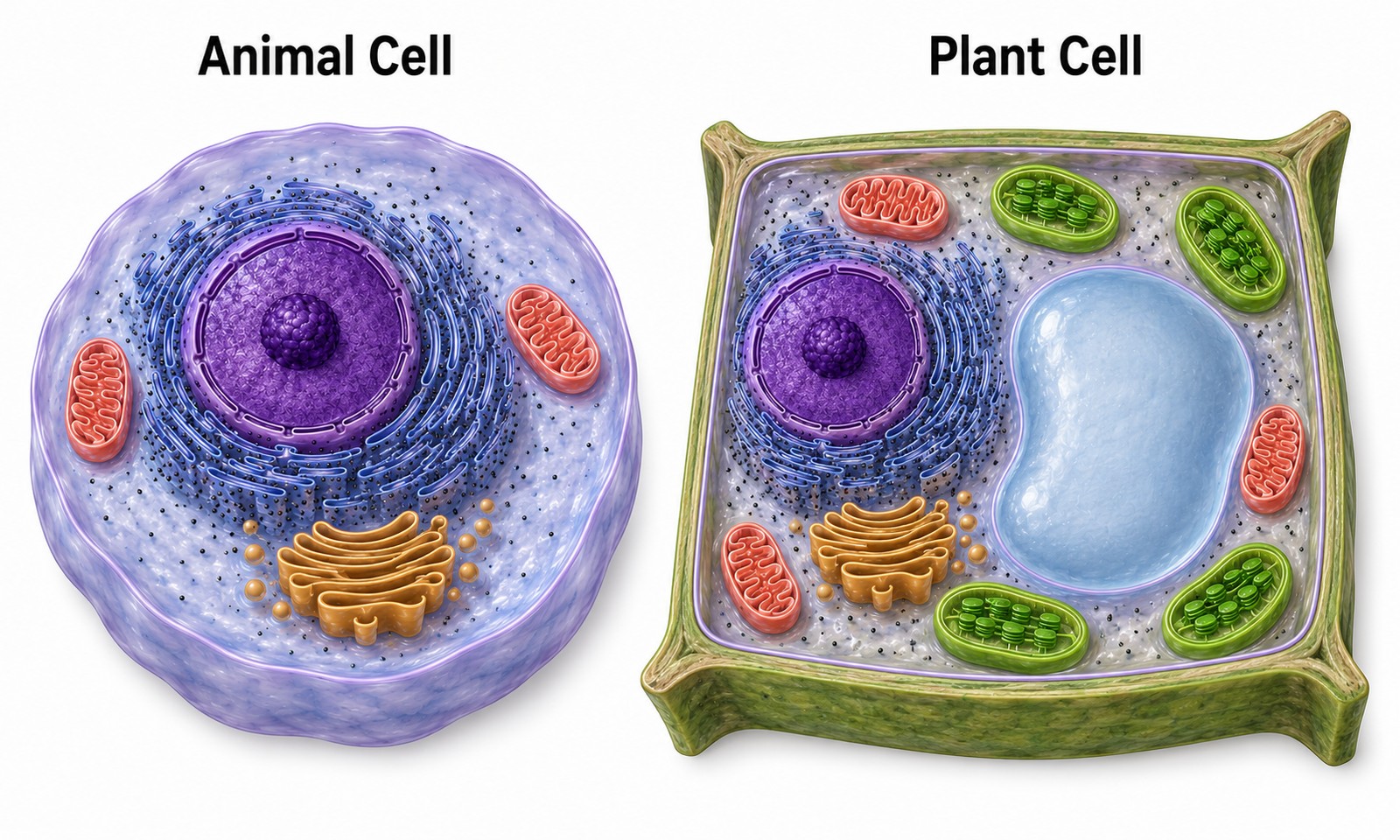
- Thành tế bào + lục lạp + không bào — chỉ có ở tế bào thực vật. Thành = lớp cứng bên ngoài; lục lạp = bầu dục xanh lục; không bào = bọng lớn ở trung tâm.
Sơ đồ tế bào động vật chuẩn
Gần như mọi câu nhận diện tế bào trên CBE đều dùng cùng một phong cách minh họa sách giáo khoa. Đây là bố cục kinh điển các em cần nhận ra:
Đặc điểm hình dạng — cách nhận biết từng bào quan
Trong đề thi các em sẽ thấy một sơ đồ và bốn phương án. Đừng nhớ vị trí; hãy nhớ hình dạng riêng biệt của từng bào quan:
Tế bào thực vật: ba cấu trúc mà tế bào động vật không có
Nếu sơ đồ là hình chữ nhật với viền ngoài dày màu xanh-nâu, đó là tế bào thực vật. Ba cấu trúc chỉ có ở tế bào thực vật:
- Thành tế bào — lớp ngoài cứng, màu xanh-nâu (nằm ngoài màng tế bào).
- Lục lạp — bầu dục xanh lục có các đĩa xếp chồng (thylakoid) bên trong. Nơi diễn ra quang hợp.
- Không bào trung tâm — một bọng lớn màu xanh nhạt chiếm 30–50% tế bào. Trữ nước và giữ độ trương của tế bào.
Chiến lược ba bước cho mọi câu nhận diện tế bào
- Xác định loại tế bào trước — hình vuông có thành xanh = thực vật; hình tròn bất định = động vật.
- Khớp đặc điểm hình dạng với chức năng được hỏi — “tạo ATP” → hình hạt đậu có nếp gấp; “đóng gói protein” → chồng túi dẹt; “lưu trữ DNA” → cấu trúc sẫm và lớn nhất.
- Loại phương án gây nhiễu — nếu câu hỏi yêu cầu cấu trúc chỉ có ở thực vật (ví dụ “lục lạp”), phương án nhiễu sẽ có các cấu trúc chỉ có ở động vật.
Tự kiểm tra
Áp dụng vào các câu hỏi luyện tập kiểu CBE
Mỗi khái niệm ở trên đều thường xuyên có mặt trong CBE. Hãy thử các câu sau để khắc sâu: