Chu trình sinh địa hóa: cacbon, nước và nitơ
Các nguyên tử tuần hoàn không ngừng qua hệ sinh thái. Các em hãy nắm vững chu trình cacbon (quang hợp ↔ hô hấp), chu trình nước (bốc hơi/mưa) và chu trình nitơ (cố định đạm + phản nitrat hóa).


Nguyên tử tuần hoàn, năng lượng thì không
Một trong những nguyên lý sâu sắc nhất của sinh thái học: năng lượng chảy theo một chiều (mặt trời → sinh vật sản xuất → tiêu thụ → nhiệt), nhưng vật chất tuần hoàn. Nguyên tử cacbon trong cơ thể các em ngay lúc này có thể đã từng ở trong khủng long, một cây dương xỉ, hay bầu khí quyển một tỉ năm trước.
CBE tập trung vào ba chu trình. Mỗi chu trình cùng có cấu trúc như nhau: bể chứa (nơi nguyên tố tồn trữ) và quá trình (cách nó di chuyển giữa các bể).
Chu trình cacbon
Cacbon là bộ khung của mọi phân tử hữu cơ. Nó di chuyển giữa bốn bể chứa chính:
- Khí quyển — dưới dạng CO₂.
- Thực vật và động vật — trong glucose, protein, chất béo, DNA.
- Đất và sinh vật phân giải — trong chất hữu cơ chết đang bị phân hủy.
- Nhiên liệu hóa thạch và đại dương — nơi lưu trữ dài hạn.
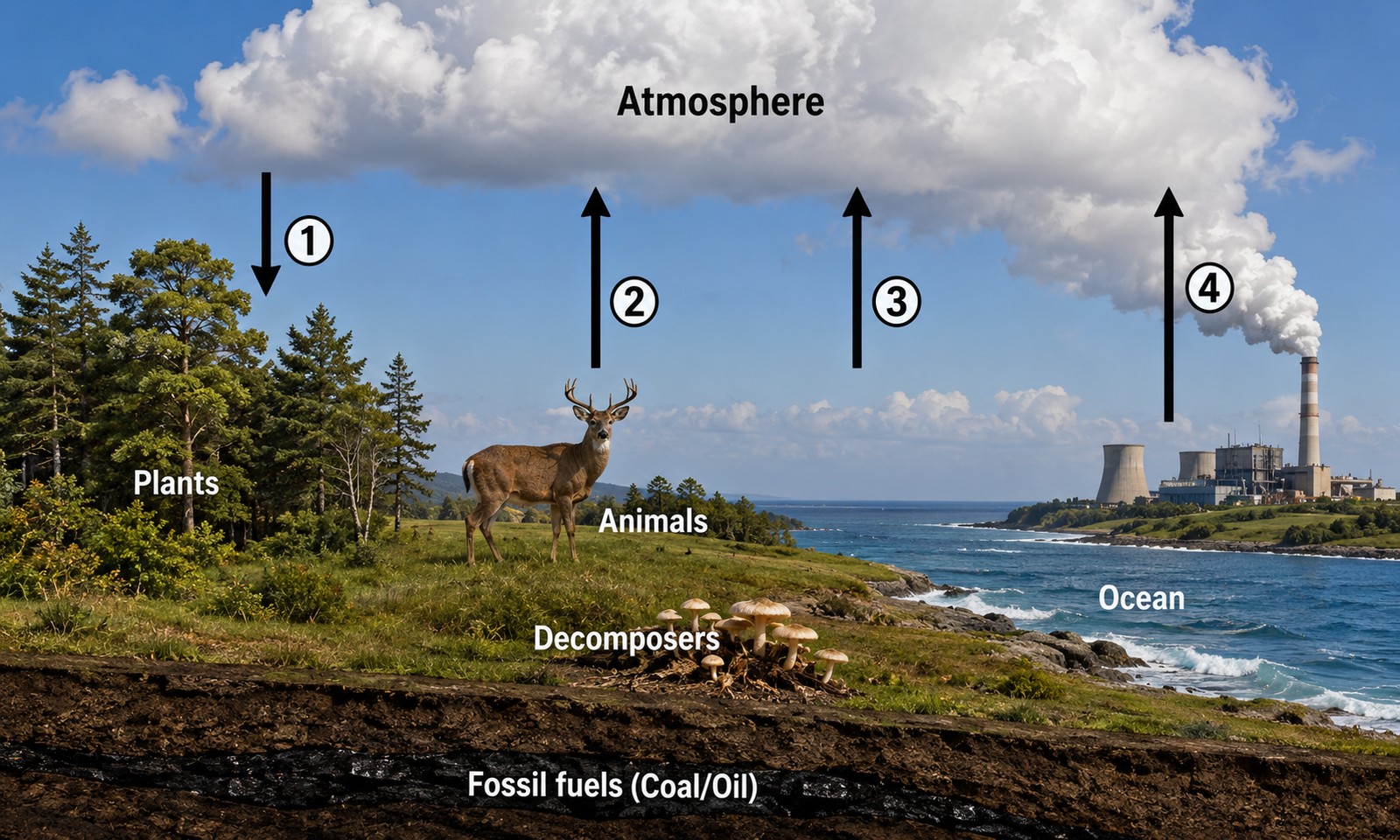
- Quang hợp — hút CO₂ từ khí quyển vào mô thực vật. (Khí quyển → thực vật)
- Hô hấp tế bào — trả CO₂ từ động vật/thực vật trở lại khí quyển. (Sinh vật → khí quyển)
- Phân giải — sinh vật phân giải phá vỡ chất hữu cơ chết, giải phóng CO₂. (Sinh vật phân giải → khí quyển)
- Đốt cháy — đốt nhiên liệu hóa thạch hoặc gỗ giải phóng CO₂. (Nhiên liệu → khí quyển)
Chu trình nước
Chu trình nước có bốn quá trình chính các em cần nhớ:
- Bốc hơi — nước ở thể lỏng chuyển thành hơi (chủ yếu từ đại dương/hồ).
- Thoát hơi nước — hơi nước thoát ra từ lá cây qua khí khổng.
- Ngưng tụ — hơi nước lạnh đi tạo thành mây.
- Giáng thủy — mưa, tuyết, mưa đá rơi trở lại mặt đất.
Chu trình đầy đủ: đại dương → bốc hơi → mây → giáng thủy → sông → đại dương.
Chu trình nitơ
Khí quyển gồm 78% khí nitơ (N₂), nhưng thực vật và động vật không thể dùng trực tiếp. Vi khuẩn làm toàn bộ công việc nặng.
- Cố định đạm — vi khuẩn biến N₂ khí quyển thành amoniac (NH₃) hoặc nitrat (NO₃−) mà cây dùng được. Đa số vi khuẩn cố định đạm sống trong nốt sần rễ cây họ đậu (đậu, đỗ, cỏ ba lá).
- Nitrat hóa — vi khuẩn đất chuyển amoniac → nitrit → nitrat.
- Đồng hóa — thực vật hấp thụ nitrat từ đất và dùng để tạo protein và DNA.
- Phân giải (amôn hóa) — sinh vật phân giải phá vỡ chất hữu cơ chết, đưa nitơ trở lại dạng amoniac.
- Phản nitrat hóa — vi khuẩn đất chuyển nitrat trở lại N₂ khí quyển. Khép kín vòng tuần hoàn.
Điểm cộng: hỗ sinh trong chu trình nitơ
Cây họ đậu (đậu, đỗ, cỏ ba lá) chứa vi khuẩn cố định đạm trong các nốt sần đặc biệt trên rễ. Vi khuẩn nhận đường từ cây; cây nhận nitơ dùng được. Đây là ví dụ kinh điển của hỗ sinh (mutualism).